QUICK FACTS
pilgrimage circuit
on foot (~40–60 days)
Ehime · Kochi
oldest hot spring
total area
in Zentsūji, Kagawa
path annually
consumption per capita
THE FOUR PREFECTURES
Kagawa is Japan's smallest prefecture by area, yet it punches far above its weight — producing the finest udon noodles on earth, housing the ancient Kompira-san mountain shrine complex, and offering the peaceful beauty of the Seto Inland Sea from the shores of Takamatsu. Here, udon is not just food — it's identity, ritual, and religion. Sanuki udon, with its thick, chewy, almost elastic texture set in a crystal-clear dashi broth, is widely considered Japan's greatest soul food: a dish so beloved that Kagawa residents eat it for breakfast. Locals call it うどん県 — "Udon Prefecture" — and mean it with complete sincerity.
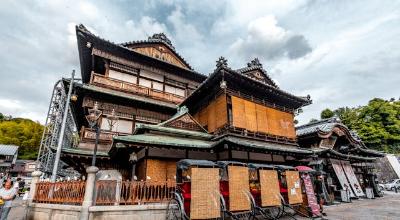
Ehime is home to Japan's oldest and most celebrated hot spring: Dogo Onsen in Matsuyama, a bathhouse so extraordinary that it directly inspired Hayao Miyazaki's Spirited Away (Studio Ghibli, 2001 — inspired by Dogo Onsen). The main building — Shinkan — opened in 1894 and has barely changed since. Steam rises at dawn from the same volcanic waters that warmed emperors 3,000 years ago. Beyond Dogo, Ehime delivers Matsuyama Castle (one of Japan's 12 surviving original castles), the citrus groves and terraced mandarins of Uwajima, and the dramatic Shimanami Kaidō cycling route connecting Shikoku to Honshu across six sea-spanning suspension bridges.
Kochi is Japan's great untamed south — the largest prefecture on Shikoku, the least urbanised, and arguably the most breathtakingly beautiful. The Iya Valley plunges through gorges so steep that vine bridges (kazurabashi) were the only crossing for centuries. Surfers chase the Pacific at Kochi's black-sand beaches. The city itself is a riot of political history — it birthed Sakamoto Ryōma, the samurai reformer credited with ending Japan's feudal era — and rewards visitors with Japan's most authentic Sunday morning market (Hirome Market) and the year-round spectacle of "Yosakoi" dancing.
Tokushima is the gateway into Shikoku, the first stop for most pilgrims beginning the 88-temple Henro circuit at Ryōzen-ji (Temple 1), and home to Japan's most electric summer festival — the Awa Odori, which floods the city's streets with 1.3 million dancers and spectators for four extraordinary nights each August. The Yoshino River — Japan's blue river — carves through the prefecture's interior creating white-water rafting, dramatic gorge scenery, and the iridescent waters of Oboke. The whirlpools of the Naruto Strait — created by tidal collisions between the Pacific and the Seto Inland Sea — are among the world's largest.
THE 88-TEMPLE PILGRIMAGE
SHIKOKU HENRO
The Shikoku Henro is one of the world's great pilgrimage routes — a 1,200-kilometre circuit of 88 temples associated with the Buddhist monk Kōbō Daishi (Kūkai), born in Kagawa in 815 AD, who is credited with bringing esoteric Shingon Buddhism to Japan. The pilgrimage encircles the entire island of Shikoku, passing through all four prefectures, climbing mountain passes, hugging coastal cliffs, crossing rice-padded valleys, and descending into hidden gorges. Unlike the Camino de Santiago or Canterbury, the Henro has no defined start or end — it is a circle. You begin again the moment you finish.
Pilgrims — called "ohenro-san" — dress in white robes symbolising purity and death, carry a wooden staff representing Kōbō Daishi himself, and receive a red stamp and calligraphy at each temple. The belief is that Daishi walks beside every pilgrim, always. "Dōgyō ninin" — two walking together — is inscribed on every pilgrim's staff. You are never alone on the Henro path.
SANUKI UDON — SOUL FOOD
SANUKI UDON
Sanuki udon is not merely noodles — it is the soul food of Japan. Born in Kagawa (古名: Sanuki Province), these noodles have a reputation entirely their own: thick, chewy, almost translucent strands of wheat noodle with a texture unlike anything else on earth — simultaneously firm and yielding, with a characteristic bounce and density that Kagawa residents call "koshi." The broth is a masterwork: a pale, crystal-clear dashi of slow-simmered kombu and iriko (dried sardines), seasoned with light soy and mirin to produce a umami depth that is addictively gentle.
In Kagawa, udon is eaten at breakfast. Self-serve "kake udon" shops — where customers collect their bowl of noodles from the kitchen counter, ladle their own broth, add toppings (tempura, soft-boiled egg, negi scallion, grated daikon), and pay at the exit for an average of ¥200–400 — are a cultural institution. The shop Yamashita (founded 1944), a 10-seat room in Takamatsu, has a line before 7am. This is completely normal in Kagawa.
Kagawa Prefecture ranks first in Japan for udon consumption per capita — by a spectacular margin. The prefecture has more udon restaurants relative to population than any other place on earth. "Udon Prefecture" is not a nickname. It appears on official tourism campaigns, on road signs, and has been the official prefectural marketing tagline since 2011.
Straw-seared bonito (skipjack tuna) sliced thick and served raw in the centre, with fresh garlic, ginger, myoga, and spring onion. The straw fire gives a subtle smokiness the oven cannot replicate. Kochi's most iconic dish — consumed for breakfast at Hirome Market. In no other prefecture do people eat this with such daily devotion.
Japan's premier citrus prefecture. Ehime's Iyokan mandarin — a cross between a mandarin and a navel orange — was cultivated here in the 19th century and remains one of Japan's best-loved winter fruits. The terraced citrus groves of Uwajima and Yawatahama turn gold between October and February. Ehime juice vending machines are on every street corner — the freshest citrus drink in Japan.
Marugame's master dish: bone-in chicken legs roasted at searing heat until the skin blisters and the meat inside remains juicy. Two styles — "Oyabird" (tough adult chicken, chewy, deeply savoury) and "Wakabird" (tender young chicken, juicier, milder). Eaten with bare hands. Best washed down with Kagawa sake or cold beer. The restaurant Ippuku in Marugame invented this dish in 1952.
Three rice flour dumplings on a skewer — red (red bean paste), yellow (egg yolk), green (matcha) — named after Soseki Natsume's beloved 1906 novel "Botchan," set in Matsuyama. The colour palette mirrors the story's three characters. Served warm from the cart outside Dogo Onsen's main entrance. An inseparable part of the Dogo ritual — buy a box, eat on the covered arcade steps, watch pilgrims pass.
Kochi's mountain interior raises some of Japan's finest free-range livestock. Tosa Wagyu cattle graze in the clean river valleys and high plateaus, producing intensely marbled beef sold at a fraction of Wagyu prices elsewhere. Shimanto pork — raised along Japan's last "pure" undammed river — has a clean, sweet fat with almost no odour. Both appear on Hirome Market grills throughout the day.
The tidal whirlpools of the Naruto Strait create the perfect conditions for Japan's finest wakame seaweed — nurtured in cold, fast-moving, mineral-rich water. Naruto wakame has a distinctive thick, crunchy texture and deep oceanic flavour far superior to the limp, cultivated variety sold elsewhere. Fresh in spring, dried year-round. Used as a gift across all four prefectures: Naruto wakame is Tokushima's most beloved local product.
DOGO ONSEN & HOT SPRINGS
Dogo Onsen is Japan's oldest known hot spring — referenced in Japan's oldest chronicle, the Kojiki (712 AD), and believed to have been in use for 3,000 years. Three emperors visited in ancient times. The Meiji-era main building (Shinkan), completed in 1894, is a three-storey wooden castle of pagoda-style roofs, red pine beams, and glazed tile that makes it one of the most architecturally extraordinary buildings in Japan.
Hayao Miyazaki has acknowledged Dogo Onsen as the principal inspiration for the Yubaba bathhouse in Spirited Away (2001, dir. Hayao Miyazaki / Studio Ghibli — inspired by Dogo Onsen) — the Oscar-winning film. The layered wooden architecture, the presiding deity, the tiered bathing hierarchy, the ancient steam rising at dawn — all of it is here, barely changed from when Miyazaki visited. Arriving at Dogo at 6am in morning mist, when the first flag is raised and the mechanical clock tower plays its tune, the connection to the film (Spirited Away, inspired by Dogo Onsen) is visceral and unmistakable.
Shikoku's river gorge onsen sit at the edge of mountain streams — rotenburo (outdoor baths) overlooking boulder-studded river channels. The finest examples are in the Iya Valley and around Oboke Gorge: naked in a mineral pool, the Yoshino River roaring below, cedar mountains above.
Saijo City has a remarkable geology: artesian springs rise directly from the ground in the city itself. Locals collect water from these natural fountains for drinking. Several ryokan offer private baths fed by pure groundwater springs — some rooms have springs rising directly through the floor. Extraordinarily unusual.
The old fishing town of Uwajima in southern Ehime has both a castle (one of Japan's smallest and most perfectly preserved) and a set of copper-sulphate onsen overlooking the pearl oyster farms of the bay. After soaking, eat fresh pearls harvested that morning — a genuinely surreal combination.
The Shikoku Karst — a high plateau of limestone pillars and moorland at 1,400m on the Kochi-Ehime border — is one of Japan's rarest landscapes. Small onsen ryokan here soak in cold, clear water that has filtered through limestone for centuries. Visible for 200km on clear days. Alpine flowers in summer.
NATURE & WILDERNESS
Kochi. One of Japan's three great "Hidden Regions." Ancient vine bridges (kazurabashi) — rebuilt annually using wisteria — cross a gorge 200m deep. Thatched farmhouses on impossible cliffs. Emerald-green water. Heike clan warriors hid here after their defeat in 1185. The valley kept its secrets for eight centuries. Come in autumn for scarlet maples reflected in the river below.
Tokushima. Twice daily, the Pacific Ocean and the Seto Inland Sea change tidal direction simultaneously, generating whirlpools up to 20m wide in the Naruto Strait. The phenomenon is unique in the world at this scale. Walk the glass-floored Uzu-no-Michi walkway directly over them, or board a sightseeing vessel into the vortex itself.
Tokushima/Kochi border. At 1,955m, Tsurugi-san is Shikoku's second highest peak and its most spiritually significant mountain — it is temple 66's satellite altar. The summit has been a Shugendo mountain ascetic training ground for over 1,200 years. A ropeway reaches 1,750m; the final 30-minute walk passes stone deities and ancient cedar forest.
Kochi. Two dramatic headlands at the south and east of Shikoku where the Pacific strikes full-force. Temple 24 at Muroto is where Kōbō Daishi achieved enlightenment — the wave-sculpted rock formations and the temple's cliff-edge position make it one of Japan's most otherworldly sites. Ashizuri Cape in the far south has year-round whale watching.
Kochi/Tokushima. The Yoshino River's upper gorge carves through jade-green water between 100m sheer limestone walls. White-water rafting in spring snowmelt (April–June). Scenic boat tours year-round. In autumn the forested cliffsides turn the full Japanese spectrum — crimson, amber, gold — perfectly reflected in the still pools between rapids.
Kagawa/Ehime. The islands of the Seto Inland Sea — Naoshima, Shodoshima, Teshima, Inujima — represent a different kind of natural beauty: olive groves, terraced citrus, sandy beaches, and a contemporary art scene that has transformed abandoned fishing villages into world-class cultural destinations. The April Setouchi Triennale is Japan's finest outdoor art event.
2026 FESTIVALS
400-year-old festival of mass dancing — 1.3 million spectators, 1,300+ dance troupes (ren) moving through Tokushima's streets in choreographed ecstasy. The "Awa Dance" is performed to a two-beat shamisen rhythm at a hypnotic mid-tempo. Women in wide-brimmed straw hats glide forward on tiptoe. Men stomp and bend in exaggerated poses. The city chant — "Odoru aho ni miru aho, onaji aho nara odorana son son" ("Whether you dance or watch, you're both fools — if you're a fool either way, you might as well dance!") — is the philosophy of Shikoku in one sentence.
FREE STREET VIEWINGTICKETED GRANDSTAND AVAILABLEThe Henro circuit never closes. Spring (March–May) and autumn (September–November) are the most comfortable walking seasons. Summer walkers face intense heat and humidity — some temples at 1,000m elevation provide relief. January sees the fewest pilgrims on the mountain trails. Pilgrim supply shops in Tokushima's Bando area near Temple 1 carry staffs, white robes, and stamp books. Beginning at dawn on a clear April morning is a transformative experience regardless of religion.
YEAR-ROUNDSPIRITUALJapan's greatest outdoor contemporary art festival occurs every three years across the islands of the Seto Inland Sea. The 2025 edition runs spring and autumn sessions — check dates for 2026 access. Site-specific works by global artists occupy abandoned schools, farmhouses, and clifftops. Lee Ufan's gallery on Naoshima alone is worth the trip to Shikoku.
CONTEMPORARY ARTBOOKING REQUIREDBorn in Kochi in 1954 as a defiant cultural response to post-war austerity, Yosakoi has grown into one of Japan's most spectacular dance festivals — 20,000+ dancers, neon costumes, traditional naruko clappers, and modern J-pop music fused with ancient movement vocabulary. Kochi's Yosakoi remains the authentic original; the Sapporo version (Yosakoi Soran) followed decades later. Four days of street performances, free for spectators.
FREE ENTRY20,000+ DANCERSKotohira-gu's grand spring matsuri brings Kagawa's most sacred mountain shrine to life with mikoshi (portable shrine) processions, traditional court music (gagaku), and ancient rites performed by priests in Heian-period robes. The 785 stone steps to the main shrine are lined with lanterns and offerings. Arriving just before dawn, watching the procession emerge from predawn cedar forest, is extraordinary.
FREE ENTRYSHINTO CEREMONYShikoku's autumn (koyo) season runs from the mountain peaks downward through October–November. The Iya Valley's mixed hardwood forest turns in layered stages: the upper gorge first, then the vine bridge approaches, then the river valley floor. The Oboke boat tours through blazing crimson and gold cliff-faces are among the most beautiful single experiences in Japan. Advance ryokan booking in Iya is essential from September.
NATURAL EVENTPEAK: MID–LATE NOVSUGGESTED ITINERARIES
ARRIVE TAKAMATSU — UDON KINGDOM
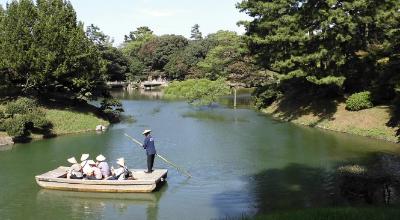
Fly or take the Shinkansen + Marine Liner to Takamatsu, Kagawa's capital. Arrive by midday and eat your first Sanuki udon at a self-serve shop within an hour of landing — this is mandatory. Spend the afternoon in Ritsurin Garden (allow 3 hours minimum). Evening in Takamatsu's Marugamemachi arcade and fishing port izakayas. Order Olive Hamachi sashimi.
NAOSHIMA + KOMPIRA-SAN
Morning ferry to Naoshima Art Island (50 min). Half day at Benesse House, the Art House Project in Honmura village, and Lee Ufan Museum. Return to Takamatsu and take the JR to Kotohira for the late afternoon climb of Kompira-san's 785 steps. Stay at a Kotohira ryokan and eat Honetsuki Dori for dinner in Marugame (20 min train).
MATSUYAMA — DOGO ONSEN & THE CASTLE
Take the Limited Express "Shimanto" or "Nanpu" west to Matsuyama (2.5 hrs). Check into a Dogo-area ryokan. Afternoon at Matsuyama Castle (ropeway up, walk down). At dusk: Dogo Onsen Honkan/Asuka-no-Yu opening ceremony as the mechanical clock tower plays — arrive 30 minutes early. Soak in the ancient waters. Buy Botchan Dango from the arcade cart. This is the single most iconic evening in Shikoku.
KOCHI — HIROME MARKET & KATSUO
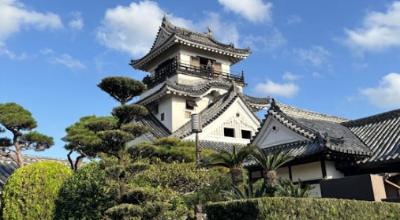
Early train south to Kochi (2.5 hrs via Limited Express). Check in and head immediately to Hirome Ichiba market — order Katsuo no Tataki at the Myojin Maru stall. Cold Kochi beer before noon. Afternoon: Kochi Castle (original surviving structure, beautiful interior), Sunday Farmers Market on the castle esplanade (year-round, best Sunday mornings). Katsurahama beach at sunset — the Ryōma statue, the Pacific.
TOKUSHIMA — AWA ODORI HALL & NARUTO
Morning bus to Tokushima (2.5 hrs via highway). Visit Ryōzen-ji Temple 1 — the starting gate of the Henro pilgrimage — even if you're not walking the circuit, standing at its gate has a quiet gravity. Afternoon: Naruto Strait whirlpools (Uzu-no-Michi walkway over the vortex). Evening at the Awa Odori Kaikan hall for the daily dance performance (year-round, timed shows). Depart from Tokushima Airport or connect to Kansai.
KAGAWA — UDON, ART ISLANDS & KOMPIRA
Two full days in Kagawa. Day 1: Arrive Takamatsu. Morning udon tour (3–4 shops before noon, perfectly possible). Ritsurin Garden afternoon. Day 2: Full-day Naoshima / Teshima island circuit. Benesse House Museum, Art House Project, Teshima Art Museum (Herzog & de Meuron, 2010 — a dewdrop-shaped shell of water, light and silence). Evening Kotohira climb + Marugame Honetsuki Dori.
EHIME — DOGO, SHIMANAMI & UWAJIMA
Day 3: Matsuyama. Castle, Dogo Onsen ritual, Botchan Dango, evening poetry at the Shiki Kinen Museum (Masaoka Shiki, Meiji-era haiku master, was born here). Day 4: Shimanami Kaidō cycling — rent a bicycle in Imabari and cross the first three bridges to Ōshima and Hakatajima islands. Coastal seafood lunch. Return to Matsuyama. Option to extend to Uwajima: pearl farms, castle, bullfighting tradition (tōgyū).
KOCHI — IYA VALLEY, CAPES & THE WILD SOUTH
Day 5: Take the scenic Yodo Line to Kochi. Afternoon in Kochi City — castle and Sunday market. Hirome Market dinner. Day 6: Iya Valley. Rent a car from Kochi and drive north into the gorge. Kazurabashi vine bridge (5 mins walk from roadside). Biwa-no-Taki waterfall. Mountain onsen ryokan overnight in Iya (book weeks ahead, only 5–10 rooms each). Day 7: Oboke Gorge boat tour at dawn (45 min). Drive south via Muroto Cape (Temple 24). Return to Kochi by evening.
TOKUSHIMA — NARUTO, PILGRIMAGE & AWA ODORI
Day 8: Highway bus Kochi → Tokushima. Naruto Whirlpools morning (glass walkway or boat). Otsuka Museum of Art afternoon (allow 3+ hours — the scale of the ceramic reproductions is genuinely shocking). Day 9: Walk Temples 1–5 on the Henro circuit — the opening five temples of the pilgrimage are clustered in the flat Tokushima plain near Naruto, making a one-day partial walk achievable and deeply moving. Day 10: Tokushima City. Awa Odori Kaikan live performance (daily). Tokushima ramen (dark soy pork broth, distinctive lard drizzle). Depart via Tokushima Airport or return bus to Osaka.
PREPARATION — BEFORE YOU BEGIN
Arrive in Tokushima City 1–2 days before your start date. Buy your ohenro kit at the Ryōzen-ji Temple 1 shop or in Tokushima city: white vest (hakui), sedge hat (sugegasa), wooden staff (kongōzue), stamp book (nōkyōchō), and vest pocket for sutras. Practise the Heart Sutra (Hannya Shingyō). Download the HenroBit app for route navigation. Stay at Ryōzen-ji's shukubō for your first night — this is auspicious. Start walking at dawn.
TOKUSHIMA — TEMPLES 1–23 (AWAKENING)
The first prefecture is Awa Province (Tokushima) — the "Dōjō of Awakening" (発心の道場). Temples 1–23 test your resolve through the flat coastal plain and early mountain climbs. Temple 11 (Fujiidera) and Temple 12 (Shōsan-ji) on Day 2–3 are the circuit's first major challenge: a 12km mountain track gaining 700m of altitude. Walking 20–30km per day. Sleep at henro huts, temple lodgings, or farmhouse minshuku (¥6,000–8,000 per night including breakfast and dinner). The circuit's most dangerous junction is at Temple 20 in the mountains — follow the metal markers, not Google Maps.
KOCHI — TEMPLES 24–39 (ASCETIC TRAINING)
The second prefecture (Tosa/Kochi) is the largest and hardest: the "Dōjō of Ascetic Training" (修行の道場). 400km of coastal cape walking, mountain ascents, and remote cape temples where the Pacific rages below. Temple 24 at Muroto Cape is the most exposed — wind and waves and the memory of Daishi's enlightenment. The walk from Temple 26 to 27 is 89km with few services: this is where pilgrims confront themselves. Kochi city (between Temples 31–33) offers rest, Hirome Market meals, and free pilgrim foot baths (osettai).
EHIME & KAGAWA — COMPLETION
Ehime (Iyo Province): Temples 40–65 — the "Dōjō of Enlightenment" (菩提の道場). The landscape becomes gentler, the temples more varied. Temple 51 (Ishite-ji) near Matsuyama is the circuit's strangest and most labyrinthine. Soak at Dogo Onsen mid-circuit. Kagawa (Sanuki Province): Temples 66–88 — the "Dōjō of Nirvana" (涼涅槃の道場). The mountain Temple 66 (Unpen-ji) via ropeway. Temple 75 (Zentsūji) — Daishi's birthplace, the most sacred. Temple 88 (Ōkubo-ji): the final stamp, the final bell. Tears are expected. Most pilgrims then travel to Kōya-san.
PRACTICAL INFO
- Takamatsu Airport (TAK) — Direct flights from Tokyo Haneda (1h), Osaka (50 min), Nagoya and Fukuoka. ANA and JAL operate. 30 min bus to Takamatsu city.
- Matsuyama Airport (MYJ) — Direct from Tokyo, Osaka, Nagoya, Fukuoka, Sapporo. Most convenient entry for Ehime.
- Kochi Airport (KCZ) — Tokyo, Osaka, Nagoya. 15 min bus or train to Kochi city.
- Tokushima Airport (TKS) — Tokyo Haneda direct (1h 10min). Limited connections but easy access from Kansai by highway bus (2h from Osaka).
- Marine Liner (JR) — From Okayama (Shinkansen connection) to Takamatsu in 55 min across the Seto Ohashi Bridge. Scenic and recommended.
- Rental car: Strongly recommended for the Iya Valley, Kochi's coastline, and rural temple access. All major rental companies at each airport. Road signs in English. Expressways connect the four prefectures.
- JR Shikoku Rail Pass: 3-day (¥10,000) or 5-day (¥17,000) unlimited JR Shikoku pass covers all limited express trains including Matsuyama, Takamatsu, Kochi and Tokushima. Excellent value for rail travellers.
- Highway bus: Connects all four prefectures at lower cost. Willer and JR buses run Osaka/Kobe → Tokushima in 2.5h, → Takamatsu in 2.5h.
- Ferries: Multiple daily sailings between Kobe/Osaka and Takamatsu/Tokushima/Matsuyama. Overnight ferries ideal: board at 11pm, arrive at 5am refreshed.
- Pilgrimage route navigation: HenroBit app (free, offline GPS maps) for Henro walking. Arrow markers on roads and trails.
- Shukubō (temple lodgings): Stay and take meals at temples — the most authentic Henro experience. Shared baths, vegetarian shōjin ryōri meals. ¥6,500–10,000 per night.
- Dogo Onsen ryokan: Stay in a traditional inn within walking distance of the bathhouse. Top choice: Nishihonkan (in the Honkan arcade) or Funaya (riverside). Book 2+ months ahead.
- Iya Valley farmhouses: Chiiori (a restored 300-year-old thatched farmhouse managed by Alex Kerr — the definitive Iya Valley experience) books out 6+ months in advance. Budget farmhouse minshuku from ¥8,000/night.
- Naoshima Benesse House: Sleep inside the museum. Rooms from ¥60,000/night. Book 3 months ahead. The most architecturally exceptional overnight in Japan.
- Business hotels: Dormy Inn and Comfort Hotel chains have locations in all four prefectural capitals. Clean, reliable, ¥6,000–9,000. All have public onsen or sauna baths.
- Budget traveller: ¥8,000–12,000/day. Sanuki udon breakfast (¥280), convenience store lunch, udon dinner. Youth hostel or henro hut accommodation.
- Mid-range: ¥18,000–28,000/day. Business hotel + meals at izakayas + temple entry fees + one or two museum admissions.
- Luxury/ryokan: ¥40,000–100,000+/night for top Dogo or Iya Valley ryokan with kaiseki dinner and private bath.
- Pilgrimage budget (walking): ¥150,000–200,000 total for a full 60-day Henro walk including accommodation, meals, and equipment.
- Cash: Essential in rural Shikoku. Many temple shops, rural ryokan, and udon shops accept cash only. Convenience store ATMs (7-Bank, Japan Post) accept foreign cards.
- Spring (March–May): Cherry blossoms, mild temperatures 15–22°C. Best for Henro walking. Matsuyama Castle's sakura trees are legendary. Naoshima Spring Triennale sessions.
- Summer (June–August): Awa Odori Festival (August 12–15) — Shikoku's unmissable event. Hot and humid (32–35°C). Pacific Coast surfing. Mountain onsen relief above 1,000m.
- Autumn (October–November): Peak foliage season in Iya Valley. Cool 10–20°C. Best photography conditions. Quiet pilgrimage trails. Ehime citrus harvest begins.
- Winter (December–February): Mild by Japanese standards (5–12°C). No crowds on pilgrimage trail. Dogo Onsen at its most atmospheric. Mandarin orange season in Ehime.
- Osettai: Gifts given to Henro pilgrims by locals — food, money, supplies — as an act of religious merit-sharing. Accept graciously and say "Namu Daishi Henjō Kongō." Never decline.
- Temple ritual order: At each temple: purify hands at the water basin, ring the bell once, light candles, light incense, place osamefuda (name slip) in the box, chant the sutras, collect your stamp.
- Udon shop etiquette: Pick up your tray, choose noodles from the counter, add toppings yourself, pay at the exit. Don't linger at the counter — move through the line. Loud slurping: expected and polite.
- Dogo Onsen dress: Wear the yukata (robe) provided by your accommodation. Wooden geta sandals. No tattoos visible in communal baths — private baths available on request.
- Photography: Never photograph inside the main hall of active temples. Sacred objects, altars, and ongoing rituals are off-limits. Outer precincts, pagodas, and gardens: freely photographable.