JAPAN.GG // DESTINATION INTEL
ACCESSING: RYUKYU ARCHIPELAGO
COORDINATES: 26.2124°N 127.6809°E
WATER TEMP: 23-29°C YEAR-ROUND
JAPAN.GG
🌊 WAVES

DESTINATION SOUTH // JAPAN.GG // 2026 EDITION

OKINAWA

JAPAN'S BLUE OCEAN KINGDOM

160 ISLANDS // CORAL PARADISE // RYUKYU KINGDOM // WORLD'S LONGEST-LIVED PEOPLE

CLASSIFIED
DESTINATION
INTEL
// JPN-OKN //

▼ SCROLL TO EXPLORE ▼

26.2124°N| 127.6809°E
NAHA, OKINAWA
--:--:-- JST
00

QUICK FACTS

160
ISLANDS
48 inhabited
archipelago
27°
CELSIUS AVG
Summer water
temperature
90+
YEARS
Women's avg
life expectancy
400
CORAL SPECIES
In Okinawan
waters
1429
FOUNDED
Ryukyu Kingdom
unified
1.47M
PEOPLE
Population,
main island
3M
TOURISTS/YR
Domestic &
international
23°
CELSIUS MIN
Water temp even
in January
01

WHEN TO VISIT

OKINAWA HAS NO WINTER — BUT TIMING STILL MATTERS

🌸 SPRING — MARCH TO MAY

Okinawa's best season. Cherry blossoms (higanzakura) peak in January–February — Japan's earliest. By March, the water is clear and warm at 22–24°C, crowds are thin, and prices haven't peaked. This is the golden window for diving at Kabira Bay before jellyfish season.

The Okinawa Haisai Festival in April brings traditional Ryukyu performing arts to the streets. Whale shark sightings at Yonaguni peak March–June.

AIR TEMP
22-27°C
WATER TEMP
22-25°C
CROWDS
LOW → MED
VERDICT
★★★★★

☀️ SUMMER — JUNE TO SEPTEMBER

Hot, humid, and brilliant. Water reaches 29°C and visibility in the ocean hits 50m+. Peak beach and diving season. June–July is rainy season (tsuyu), bringing afternoon storms that pass quickly. Typhoon season runs July–October — always check JMA forecasts.

The Eisa Festival (August) is unmissable: explosive Okinawan drum-dance performances every evening across the island. Uma Ashibi horse festivals and Ryukyu fireworks are equally spectacular.

AIR TEMP
29-33°C
WATER TEMP
27-29°C
CROWDS
PEAK
VERDICT
★★★★☆

🌊 AUTUMN — OCTOBER TO NOVEMBER

The hidden gem season. Typhoon risk drops sharply after October. Water is still warm (25–27°C) and tourist numbers plummet. You can have Kondoi Beach on Taketomi Island almost entirely to yourself. The famous manta rays of Ishigaki Island are most reliable October–November.

Visibility in the water during autumn is exceptional — often exceeding 40m. Local Okinawans consider November–December their personal favourite travel window.

AIR TEMP
24-28°C
WATER TEMP
25-27°C
CROWDS
LOW
VERDICT
★★★★★

🌺 WINTER — DECEMBER TO FEBRUARY

The secret weapon. Air temp drops to 15–20°C — too cool for beach swimming — but the island bursts into cherry blossoms from late January. Whale watching season is peak December–April with humpbacks breaching near Zamami Island. Water clarity is often at its annual best.

Winter is the cheapest time to fly and stay. Naha's Kokusai-dori is quieter. Many mainland Japanese visit for the warmth relative to Tokyo's freezing temperatures. Still 1000% better than Hokkaido in February.

AIR TEMP
15-20°C
WATER TEMP
23-25°C
CROWDS
MINIMAL
VERDICT
★★★★☆

🌡️ TEMP CONVERTER

+28°C
= 82°F
🏖️ Perfect beach day in Okinawa
02

BEACHES OF OKINAWA

RANKED — FROM GOOD TO TRANSCENDENT
01
KONDOI BEACH
🏝️ TAKETOMI ISLAND, YAEYAMA

Japan's most perfect beach. Star-shaped sand grains (hoshizuna) found nowhere else on Earth. Shallow turquoise water stays below knee-height for 100m. Zero development. Accessible only by 10-minute ferry from Ishigaki. Arrive by 8am — it fills by 10am in peak season.

5kmFERRY FROM ISHIGAKI
1-2mWATER DEPTH
FREEENTRY
02
KABIRA BAY
🏝️ ISHIGAKI ISLAND, YAEYAMA

One of Japan's Top 100 scenic spots. Electric turquoise water so clear you can see the coral 6m below from a glass-bottom boat. Swimming is prohibited (protects the black pearl beds) but kayaking is permitted. Manta rays pass through the bay October–November. The view from the observation deck alone is worth the trip.

30minFROM ISHIGAKI CITY
NO SWIMKAYAK OK
MANTASOCT–NOV
03
FURUZAMAMI BEACH
🏝️ ZAMAMI ISLAND, KERAMA

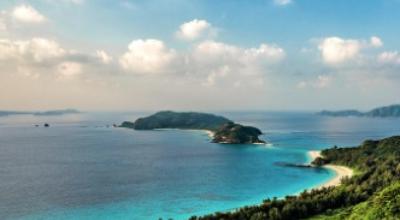
The Kerama Islands were named a national park for a reason. Furuzamami has visibility so exceptional (up to 50m) that snorkellers routinely report it as the most underwater wildlife they've ever seen without a wetsuit. Green sea turtles approach you within metres. The sand is snow-white. Humpback whale watching from January adds another dimension.

50mVISIBILITY
TURTLESYEAR-ROUND
2hrFERRY FROM NAHA
04
EMERALD BEACH
🏝️ MOTOBU, MAIN ISLAND NORTH

The best beach on the main island. Blue crystal water, white sand, and the Ocean Expo Park backdrop. One of the few main island beaches that genuinely competes with the outer islands. The adjacent Okinawa Churaumi Aquarium (world's first to house whale sharks) makes this a full-day destination. Lifeguards, facilities, and calm lagoon swimming.

FREEWITH PARK ENTRY
WHALE SHARKSAQUARIUM
2hrFROM NAHA
05
HATENO HAMA
🏝️ KUME ISLAND

A 7km long sandbar that emerges from the ocean like a mirage. Dubbed "Okinawa's most beautiful beach" by Japanese travel media — and it may be correct. No permanent structures. The sand changes shape with each typhoon. Accessible only by boat from Kume Island (30 min, ¥2,000). Bring everything — no services. Also known as Hatoma Hama.

7kmSANDBAR LENGTH
BOAT ONLYACCESS
NO FACILITIESPACK EVERYTHING
06
NISHIHAMA BEACH
🏝️ HATERUMA ISLAND

Japan's southernmost beach — and one of its most remote. Hateruma is the southernmost inhabited island in Japan, closer to Taiwan than to Tokyo. Zero commercial development. The Milky Way is visible here on cloudless nights in a way unimaginable from the mainland. Coral reefs begin just 10m from shore. Minimum 1-night stay required to reach it.

SOUTHERNMOSTBEACH IN JAPAN
MILKY WAYVISIBLE AT NIGHT
FERRY ONLYFROM ISHIGAKI
03

DIVING & SNORKEL

WORLD TOP-10 DIVE DESTINATIONS — CONFIRMED
🦈
YONAGUNI MONUMENT
🏝️ YONAGUNI ISLAND // ADVANCED DIVE

The most controversial dive site on Earth. A massive stone structure of perfect right angles at 25m depth — potentially natural, potentially ancient ruins from a 10,000-year-old Jomon civilization. UNESCO has examined it. Debate continues. Hammerhead shark schools of 100+ arrive November–March. Japan's westernmost point; closer to Taiwan than Okinawa. Currents are severe.

DEPTH: 5–30m // BEST: NOV–MAR (HAMMERS) // LEVEL: ADVANCED
Currents: Strong — always dive with a local guide. Never dive alone.
Getting there: Daily flights from Naha (RAC airlines), 1.5 hrs. Small island — book accommodation early.
Best operators: Yonaguni Diving Service, Sanrizzo Diving.
Whale sharks: March–July in surrounding waters.
Hammerheads: Aggregations of 100+ reported November–March at the monument site.
🐋
MANTA SCRAMBLE
🏝️ ISHIGAKI ISLAND // ALL LEVELS

The most reliable manta ray dive site in Japan — possibly Asia. Up to 100 mantas aggregate here year-round, peaking October–May. Named "Manta Scramble" because the rays arrive in such numbers they seem to compete for position. Shallow (8–20m), visibility 20–40m. One of the few places globally where you can swim with mantas without a liveaboard or expensive permit.

DEPTH: 8–20m // BEST: OCT–MAY // LEVEL: ALL LEVELS
Manta count: 5–100 rays per dive. Average session: 20+ mantas.
Operators: Ishigaki Diving School, Umicoza.
Conditions: Generally calm. Entry level divers welcome with certified guide.
Snorkelling: Possible in good conditions — check with local operators.
Nearby sites: Barracuda point, Blue Cave at Maezato.
🌊
BLUE CAVE
🏝️ MAEDA POINT, MAIN ISLAND // BEGINNER

Okinawa's most famous dive site and a perfect entry point. Sunlight refracts through an underwater arch at 8–15m, filling a cavern with electric blue bioluminescent light. Tropical fish crowd the walls. 20 minutes from Naha by taxi. Perfect for beginners and snorkellers — accessible even on a day trip. The photo opportunities are extraordinary.

DEPTH: 5–15m // BEST: APR–SEP // LEVEL: BEGINNER / SNORKEL
Best time: Arrive before 9am — the sun angle creates the best blue effect 9am–noon.
Operators: Numerous; REEF Encounters, Umino-ie Diving School.
Crowded? Yes. Book weekday mornings to avoid peak crowds.
Snorkel option: Available — no certification required. ¥5,000–8,000 with equipment rental.
🐢
KERAMA ISLANDS
🏝️ NATIONAL PARK // ALL LEVELS

Japan's top marine national park. Over 200 species of coral, sea turtles that approach within arm's reach, whale sharks, and dolphins. Visibility regularly exceeds 50m. The waters are so pristine the Japanese refer to the colour as "Kerama Blue" — a specific shade found nowhere else. Ferry from Naha: 2 hours to Zamami, 1 hour to Aka Island.

DEPTH: 5–40m // BEST: APR–NOV // LEVEL: ALL LEVELS
🐟
IRABU ISLAND
🏝️ MIYAKO ARCHIPELAGO // INTERMEDIATE

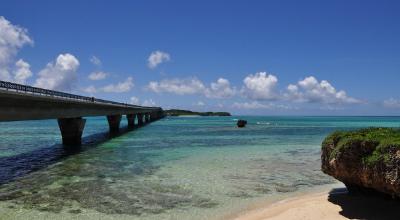
The last undiscovered gem of Okinawan diving. Connected to Miyako by Japan's longest toll-free bridge. Crystal clear water, strong currents bringing nutrient-rich upwellings, and dramatically fewer tourists than Ishigaki or the main island. Famous for the underwater caves of Sawada no Hama and the bluefin tuna aggregation at Shimoji Island.

DEPTH: 10–40m // BEST: MAR–NOV // LEVEL: INTERMEDIATE
🦑
NAGO BAY NIGHTDIVE
🏝️ NORTHERN MAIN ISLAND // INTERMEDIATE

Okinawa's best night dive experience. Bioluminescent plankton transforms the water into a natural light show. Octopus, cuttlefish, lion fish, and the extremely rare flamboyant cuttlefish emerge after dark. Local operators run dusk departure boats. Pair with a morning visit to the Okinawa Churaumi Aquarium 20 minutes away.

DEPTH: 8–25m // BEST: JUN–OCT // LEVEL: INTERMEDIATE
04

OKINAWA VS HAWAII

THE DEFINITIVE COMPARISON — READ BEFORE YOU BOOK
🇯🇵
OKINAWA
RYUKYU ISLANDS, JAPAN
VS
🇺🇸
HAWAII
POLYNESIAN ISLANDS, USA
COST PER DAY ¥12,000–20,000/day mid-range. Budget options abundant. ¥600 ramen exists.
COST
COST PER DAY $200–400+/day mid-range. Budget options scarce. Restaurant meals $25–50+.
WATER CLARITY "Kerama Blue" — up to 50m visibility. Coral reefs intact. No algae runoff.
OCEAN
WATER CLARITY Variable — 10–30m. Some reefs damaged by warming. Big Island clearest.
CORAL COVERAGE Over 400 species. National marine park protections. Largely pristine.
CORAL
CORAL COVERAGE ~50+ species. Hawaii has lost ~50% of its coral since 1998 due to bleaching events.
FOOD SCENE World-unique cuisine: goya champuru, taco rice, Okinawa soba, awamori. Local izakayas from ¥500.
FOOD
FOOD SCENE Excellent poke, plate lunches, and fusion. But largely US price points. Quality high, variety good.
BIG WAVES / SURF Sheltered seas. Surfing minimal. Chatan area has small breaks. Not a surf destination.
SURF
BIG WAVES / SURF World-class. Pipeline, Jaws, Waimea — legendary. Best big wave surfing on Earth.
CULTURAL DEPTH 600-year Ryukyu Kingdom. UNESCO Gusuku castles. Eisa dance. Sanshin music. Distinct identity.
CULTURE
CULTURAL DEPTH Rich Native Hawaiian tradition. Hula, lei, Polynesian navigation history. Complex colonial history.
CROWDS Okinawa: 3M tourists/year across 160 islands. Outer islands nearly empty.
CROWDS
CROWDS 10M tourists/year concentrated on Oahu. Waikiki is extremely crowded year-round.
FLIGHT FROM ASIA 2.5h from Tokyo, 1.5h from Seoul/Shanghai. Direct flights from most Asian hubs.
ACCESS
FLIGHT FROM USA 5h from LA / SF. Excellent for North American travelers. Easiest Pacific destination.
SAFETY Japan-level safety. Extremely low crime. Lost wallets returned. Tap water drinkable.
SAFETY
SAFETY Generally safe but petty theft common. Car break-ins at trail heads and beaches.
LONGEVITY / WELLNESS World's highest concentration of centenarians. Ikigai philosophy. Blue Zone certified.
WELLNESS
LONGEVITY / WELLNESS High health rankings for US states. Active outdoor culture. Good air quality.
NIGHTLIFE Naha's Kokusai-dori has bars and clubs. American Village at night is lively. Not Tokyo-level.
NIGHTLIFE
NIGHTLIFE Waikiki has world-class resorts, beach bars, and late-night dining. Stronger nightlife scene.

🏆 THE VERDICT

For Asian travellers, Okinawa wins on nearly every metric: cost, coral quality, food, safety, cultural authenticity, and crowd avoidance. Hawaii is superior for surf, US-accessible travel, and resort-scale nightlife. The real question: do you want the adventure of a distinctly foreign culture (Ryukyu) or the comfort of an Americanized tropical resort? Both are outstanding — just very different experiences. For our money, Okinawa's outer islands represent the finest uncrowded tropical destination in all of Asia at a fraction of Hawaiian prices.

05

RYUKYU KINGDOM

600 YEARS OF INDEPENDENT CIVILIZATION

THE FORGOTTEN KINGDOM

Most visitors to Japan don't know that Okinawa was an entirely separate kingdom until 1879. The Ryukyu Kingdom (1429–1879) was a powerful maritime trading nation that operated its own diplomatic relationships with China, Korea, Japan, and Southeast Asian kingdoms simultaneously.

Ryukyu was a neutral trade hub — the Switzerland of the Pacific. Its strategy was art, music, and commerce. The kingdom imported culture from Asia and Polynesia (dance, textiles) and synthesized them into something entirely unique.

The result is a culture that is definitively Japanese and definitively not. The language (Uchinaaguchi) is mutually unintelligible with Japanese. The food is entirely distinct. The music uses a three-stringed sanshin (a Chinese erhu cousin) not the Japanese shamisen. The castles are built in a circular configuration unlike any other Japanese architecture.

SHURI CASTLE
The UNESCO World Heritage throne of the Ryukyu Kings. Burned in 2019 — currently being rebuilt. Expected completion 2026. The Seiden (main hall) in vivid Ryukyu red is one of Japan's most striking architectural statements.
GUSUKU CASTLES
Nine UNESCO-listed Gusuku (castle) sites scattered across Okinawa. Nakijin, Katsuren, and Zakimi are the most accessible. Unlike mainland Japan's wooden castles, Gusuku are limestone ruins with views over the coral sea.
EISA DANCE
Okinawa's signature art form. Young men and women perform explosive percussive dances with massive taiko drums to welcome the spirits of ancestors. The Koza Eisa Festival in August is the main event — 10,000 performers on the streets.
SANSHIN & MUSIC
The sanshin (three-stringed snake-skin instrument) is the soul of Ryukyu music. Begin or Die (花/Hana) by BEGIN is the unofficial anthem of modern Okinawa. Yosakoi Soran and kachashi (improvised Okinawan dance) complete the picture.
06

ISLAND GUIDE

FROM THE MAIN ISLAND TO THE EDGE OF JAPAN
🏯
NAHA & MAIN ISLAND
🏙️ OKINAWA HONTŌ // HQ & BASE CAMP

Naha is where you land and reload. Kokusai-dori ("International Street") is the bustling main artery — tourist, yes, but also genuinely good for Okinawan craft shopping, awamori bars, and last-minute diving bookings. The First Makishi Public Market is the real Naha: every creature the ocean produces on ice by 7am. Drive north for American Village (retro US base culture), Churaumi Aquarium, and the Cape Manzamo cliffs.

SHURI CASTLE KOKUSAI-DORI CHURAUMI AQUARIUM AMERICAN VILLAGE
🐋
KERAMA ISLANDS
🏝️ ZAMAMI / AKA / GERUMA // 40KM FROM NAHA

Japan's finest marine national park. The Kerama Islands are where Okinawa stops being a tourist destination and starts being a revelation. The "Kerama Blue" of the water — a specific hue between Caribbean turquoise and Pacific cobalt — has its own name because it exists nowhere else. Humpback whales pass through January–April. Accessible as day trips from Naha, but one night minimum is essential.

NATIONAL PARK WHALE WATCHING TURTLE SNORKEL KERAMA BLUE
🪸
ISHIGAKI ISLAND
🏝️ YAEYAMA ARCHIPELAGO // 2HR FLIGHT FROM NAHA

Gateway to the Yaeyama Islands and arguably the most complete tropical destination in Japan. Direct flights from Tokyo, Seoul, and Taipei. The Yaeyama archipelago (Iriomote, Taketomi, Yonaguni) is accessed by ferry from Ishigaki. The manta rays of Manta Scramble are alone worth the flight. Ishigaki city has excellent restaurants, awamori distilleries, and the warmest hospitality in Japan.

MANTA RAYS YAEYAMA BASE STAR-SAND BEACHES AWAMORI DISTILLERY
🐆
IRIOMOTE ISLAND
🏝️ YAEYAMA // 20MIN FERRY FROM ISHIGAKI

90% primary jungle. Home to the critically endangered Iriomote cat — a species found on no other island on Earth. The Urauchi River kayak into the forest interior is the most otherworldly experience in all of Okinawa. The mangrove paddling at Nakama River is best at sunrise. Virtually no development outside the port towns. Crocodilians patrol the river banks.

IRIOMOTE CAT JUNGLE KAYAK MANGROVES UNESCO CANDIDATE
🌺
MIYAKO ISLAND
🏝️ MIYAKO ARCHIPELAGO // 45MIN FROM NAHA

The most underrated island in the entire archipelago. Direct flights from Tokyo. Yonaha Maehama — a 7km sweep of perfect white sand — is frequently voted Japan's best beach. The water in the Miyako Strait has the most dramatic deep-water blue in the region. Strong currents bring pelagic fish. Less developed than Ishigaki. The local Miyako soba (flat noodles, subtle pork broth) is one of Japan's great regional dishes.

YONAHA MAEHAMA MIYAKO SOBA IRABU BRIDGE PELAGIC DIVING
⛩️
TAKETOMI ISLAND
🏝️ YAEYAMA // 10MIN FERRY FROM ISHIGAKI

Okinawa frozen in the Meiji era. The entire village is a preserved traditional settlement: white coral-sand lanes, orange-tiled roofs, shisa guardian lions on every gatepost. No cars — the island's only transport is by water buffalo cart or bicycle. Population 300. The star-sand beach (hoshizuna) at Kondoi is 10 minutes by bike. Japan's most perfect island for one night.

TRADITIONAL VILLAGE WATER BUFFALO CART KONDOI BEACH STAR SAND
07

BLUE ZONE: LONGEVITY SECRETS

WHY OKINAWANS LIVE THE LONGEST IN THE WORLD
100+
CENTENARIANS PER 100,000
Highest concentration of people over 100 in the world. The ratio is 3× the US average.
90
YEARS WOMEN'S AVG LIFESPAN
Historically highest female life expectancy on Earth. Diet + ikigai cited as key factors.
30%
LOWER CANCER RATE
Versus mainland Japanese. Attributed to turmeric (ukon), goya (bitter melon), and less red meat.
7
MOAI FRIENDS GROUPS
Traditional "moai" social support circles where members financially and emotionally support each other for life.

IKIGAI + HARA HACHI BU

Ikigai (生き甲斐) — "reason to wake up." Okinawan centenarians universally cite a clear sense of purpose as the foundation of long life. For many, ikigai is tending their garden, caring for grandchildren, or playing sanshin music. Crucially, Okinawans don't retire from ikigai — they simply shift its form.

Hara Hachi Bu — the Confucian-derived practice of eating until 80% full. Okinawans traditionally consume 1,800 calories/day versus the US average of 2,500. The 20% gap over a lifetime translates to dramatically less cellular oxidative stress.

THE BLUE ZONE DIET
60% calories from sweet potato (imo). Goya (bitter melon) — bitter, anti-inflammatory, blood-sugar regulating. Tofu — higher than mainland consumption. Sea vegetables (mozuku seaweed) — eaten daily. Minimal red meat, dairy, or processed food.
UKON (TURMERIC)
Okinawans consume 1.5g turmeric daily in tea, cooking, and awamori. Anti-inflammatory curcumin at this dose is measurably associated with lower rates of dementia, cancer, and arthritis — confirmed in multiple longitudinal studies.
MUGWORT (FUUCHIBAA)
Okinawan herb used in champuru stir-fries and herbal teas. Rich in antioxidants. Added to the tofu-champuru dish that old Okinawans call "the medicine plate." Available at every market in Naha.
08

OKINAWAN CUISINE

THE MOST DISTINCT REGIONAL CUISINE IN ALL OF JAPAN
🥬
GOYA CHAMPURU
ゴーヤーチャンプルー // GŌYĀ CHANPURŪ

Okinawa's signature dish. Bitter melon (goya) stir-fried with tofu, egg, pork belly, and dried fish flakes. "Champuru" means "mixed up" in Uchinaaguchi — a metaphor for Okinawa's entire culture. The bitterness of goya is the flavour of the island. Non-negotiable eating. Find it everywhere from ¥600.

WHERE: ANY LOCAL RESTAURANT, EVERYWHERE, ALWAYS
🍜
OKINAWA SOBA
沖縄そば // TECHNICALLY NOT SOBA

Thick flat wheat noodles in a delicate pork-and-bonito broth, topped with slow-braised soki (spare rib) or sanmai-niku (layered pork belly). Despite being called "soba," it contains no buckwheat — a legally contested distinction won by Okinawa in 1978. Miyako soba and Yaeyama soba are thinner regional variants.

WHERE: YANBARU SHOKUDO (NAHA), ANY LOCAL SOBA-YA
🌮
TACO RICE
タコライス // INVENTED 1984, KOZA CITY

One of Okinawa's strangest inventions — and one of its most beloved. Taco meat, cheese, lettuce, tomato, and salsa on a bed of white rice. Culture of Koza (now Okinawa City), it has become entirely Okinawan over four decades. Available everywhere from ¥500–800. Cheese is optional but correct.

WHERE: PARLOUR SENRI (KOZA) — THE ORIGINAL. ALSO UBIQUITOUS.
🍶
AWAMORI
泡盛 // OKINAWA'S INDIGENOUS SPIRIT

Japan's oldest distilled spirit — made from Thai indica rice using black koji mold, unique to Okinawa. Unlike Japanese sake (fermented) or shochu (distilled from barley/sweet potato), awamori is pot-still distilled at 30–43% ABV and aged in clay pots called kame. Vintage (kusu) aged 3+ years develops complex notes of vanilla, grass, and warm earth.

WHERE: ZUISEN DISTILLERY (SHURI NAHA) — TOURS + TASTING FROM ¥600
🐷
RAFUTE
ラフテー // BRAISED PORK BELLY

Okinawa's answer to Chinese red-braised pork. Thick slabs of kurobuta (black pig) belly braised for 4+ hours in awamori, soy, and mirin until the collagen dissolves. The result melts at the touch of chopsticks. Served with mustard. One of the most deeply satisfying dishes in the entire Japanese archipelago. Kurobuta pig has lived on the main island since the 15th century.

WHERE: YUNANGI RESTAURANT, NAHA — THE INSTITUTION FOR OKINAWAN HOME COOKING
🥤
UKON TEA
ウコン茶 // TURMERIC TEA

The daily ritual of Okinawan centenarians. Brewed from fresh or dried turmeric root, usually consumed before meals. Bright yellow-orange. Subtly bitter. Researchers from multiple longevity studies have identified daily ukon as a consistent variable among centenarians. Available at every convenience store and supermarket in Okinawa for ¥150. Try the bottled version first if you're unsure.

WHERE: EVERY FAMILY MART, LAWSON & SUPERMARKET IN OKINAWA
🦑
MOZUKU
もずく // BROWN SEAWEED

The world's most researched seaweed for health properties. Okinawa produces 90% of Japan's mozuku — and Okinawans eat it daily, usually in vinegar dressing or as a tempura. Fucoidan, its key compound, has demonstrated anti-cancer, anti-viral, and anti-aging properties in over 1,000 peer-reviewed studies. Available fresh at markets or as bottled seasoned cups for ¥100.

WHERE: MAKISHI PUBLIC MARKET, ALL SUPERMARKETS, MANY RESTAURANTS
🍦
BENI-IMO
紅芋 // PURPLE SWEET POTATO

The visual icon of Okinawan food culture. The deeply purple flesh of the Okinawan sweet potato colours everything from tarts to soft-serve ice cream to chip packets a vivid violet. The antioxidant anthocyanin responsible for the colour is the reason beni-imo appears on every longevity research list. The soft-serve at Okinawa World is ¥350 and unmissable. Buy the tarts at the airport on the way home.

WHERE: OKASHIGOTEN SHOPS EVERYWHERE. UBIQUITOUS SOFT SERVE AT ALL TOURIST SITES.
09

2026 EVENTS

CONFIRMED & RECURRING 2026 DATES — PLAN YOUR TRIP
JAN – FEB 2026
CHERRY BLOSSOM SEASON
📍 NAKIJIN CASTLE + YAEZU-DAKE — NORTH OKINAWA

Japan's earliest cherry blossoms. Okinawa's higanzakura (Prunus campanulata) peaks 6–8 weeks before Tokyo. Nakijin Castle ruins are the most dramatic setting — pink blossoms cascading over UNESCO limestone walls. Yaezu-dake in Naha hosts the Okinawa Cherry Blossom Festival. Cooler temperatures make hiking pleasant.

FREE ENTRY (CASTLE FEE ¥400) JAPAN'S EARLIEST SAKURA
DEC 2025 – APR 2026
HUMPBACK WHALE WATCHING
📍 ZAMAMI ISLAND, KERAMA — + NORTHERN WATERS

Humpback whales migrate to Okinawan waters every winter to breed and calf. Zamami Island has the highest density of sightings in Japan — over 120 individual whales identified by researchers. Tour boats run daily from Zamami port and Naha. Breaching, tail-slapping, and mother-calf pairs are regularly observed. One of the most accessible whale-watching experiences in Asia.

¥6,000–8,000 PER TOUR HIGH SUCCESS RATE
MAR – MAY 2026
WHALE SHARK SEASON
📍 YONAGUNI ISLAND + KERAMA WATERS

The whale sharks arrive on schedule. Up to 8m individuals pass through Okinawan waters March–June, with peak encounters at Yonaguni in late March. Licensed dive operators offer snorkel encounters from ¥8,000–12,000. Yonaguni also delivers hammerhead shark schools simultaneously. The combination of whale sharks, hammerheads, and the mysterious underwater monument in one trip is hard to beat globally.

WHALE SHARKS + HAMMERS
MAY 3–5, 2026
NAHA PORT FESTIVAL
📍 NAHA PORT — MAIN ISLAND

Golden Week brings Okinawa's biggest port festival: dragon boat racing (haarii), live sanshin music, awamori tasting markets, and traditional Ryukyu performing arts on floating stages. The haarii races date to the 15th-century Ryukyu Kingdom as prayers for fishing safety. Teams from across the archipelago compete. Best food stalls in Naha's annual calendar.

FREE ENTRY DRAGON BOAT RACING
AUG 14–16, 2026 (OBON)
EISA MATSURI
📍 KOZA / OKINAWA CITY — MAIN ISLAND

The spiritual climax of the Okinawan year. Eisa is performed on Obon (the Buddhist ancestor festival) to welcome and guide the spirits of the dead. Young performers in brilliant costumes dance with enormous taiko drums through the streets from dusk until late at night. The Koza Eisa Festival is the largest concentration — thousands of performers from across Okinawa converging on a single stage.

FREE ENTRY UNMISSABLE
OCT – NOV 2026
MANTA PEAK SEASON
📍 MANTA SCRAMBLE — ISHIGAKI ISLAND

The Manta Scramble at Kabira Bay peaks October–November when water temperatures drop slightly and trigger feeding aggregations. This is when you see 40–100 rays in a single dive — something genuinely rare anywhere on Earth. Book accommodation and dive operators 3+ months ahead. The nearby Kondoi Beach on Taketomi still has warm enough water for swimming.

¥8,000–12,000 DIVE TOUR UP TO 100 MANTAS
LIVE STREET VIEW // NAHA, OKINAWA
VIBE CHECK: KOKUSAI-DORI
📍 NAHA'S MAIN STREET — HEART OF OKINAWA

Step into Naha before you book. The ¥2 awamori bars are down the side streets left. The beni-imo soft serve is 300 metres ahead. This is what you land into.

INTERACTIVE KOKUSAI-DORI 360° VIEW
10

SAMPLE ITINERARIES

01

ARRIVE NAHA — SHURI + KOKUSAI-DORI

Land at Naha Airport (OKA). Monorail to Omoromachi (4 stops). Check in. Head to Shuri Castle (UNESCO) for sunset over the coral sea. Walk to Kokusai-dori for your first goya champuru. Try awamori at a local bar on Heiwa-dori market streets. Sleep: Naha city hotel.

SHURI CASTLE KOKUSAI-DORI HEIWA-DORI FIRST AWAMORI
02

KERAMA ISLANDS — SNORKEL + TURTLES

Ferry from Naha Tomari Port to Zamami Island (1.5hr). Drop bags. Snorkel at Furuzamami Beach — expect turtles by 11am. Glass-bottom boat tour in afternoon. Whale watching optional (Dec–Apr). Overnight on Zamami for sunset on the western deck — genuinely one of Japan's finest views.

ZAMAMI FERRY FURUZAMAMI SNORKEL SEA TURTLES KERAMA SUNSET
03

RETURN TO MAIN ISLAND — NORTH DRIVE

Morning ferry back to Naha. Rent a car. Drive north on Route 58. Stop at Cape Manzamo (limestone arch over turquoise ocean, no entry fee). Continue to Okinawa Churaumi Aquarium — whale sharks, manta rays, coral reef tunnel. Emerald Beach inside the Ocean Expo Park for afternoon swim. Drive to Onna-son for ryokan dinner.

CAPE MANZAMO CHURAUMI AQUARIUM EMERALD BEACH ONNA RYOKAN
04

BLUE CAVE DIVE + AMERICAN VILLAGE

Morning dive or snorkel at Blue Cave, Maeda Point (book operator night before — ¥6,000 snorkel). Lunch at Hamabe-no-Chaya (a cafe that literally sits over the ocean). Drive south to American Village (Mihama) for Okinawa's wildest architectural fever dream: Ferris wheel, US-style diners, local craft shops, sunset rooftop bars. Taco rice is mandatory here.

BLUE CAVE MAEDA POINT AMERICAN VILLAGE TACO RICE
05

MAKISHI MARKET + LAST AWAMORI + DEPART

Rise at 7am for Makishi Public Market (First Makishi) — every ocean creature Okinawa produces. Have your last Okinawa soba at Yanbaru Shokudo. Buy beni-imo tarts and Orion Beer at the airport shops. Final awamori tasting at the Zuisen distillery if your flight is afternoon. The airport gift shops are surprisingly excellent.

MAKISHI MARKET OKINAWA SOBA BENI-IMO TARTS AIRPORT DEPART
1–2

MAIN ISLAND — NAHA + NORTH CIRCUIT

Days 1–2 follow the Classic Itinerary days 1–3 above. Shuri Castle → Kerama Islands overnight → North Drive with Churaumi and Emerald Beach.

3–5

FLY TO ISHIGAKI — YAEYAMA ISLANDS

Day 3: Fly Naha → Ishigaki (55 min, ANA/JTA). Check in to Ishigaki city hotel. Ferry to Taketomi Island (10 min, ¥750) — ride the water buffalo cart, cycle to Kondoi Beach before sunset. Star sand in palm. Day 4: Full day diving or snorkelling at Manta Scramble (book operator). Day 5: Ferry to Iriomote Island — Urauchi River kayak into primary jungle. Return to Ishigaki for the night.

ISHIGAKI FLIGHT TAKETOMI ISLAND MANTA SCRAMBLE IRIOMOTE JUNGLE
6

KABIRA BAY + ISHIGAKI CITY NIGHT

Rent a scooter or car. Morning at Kabira Bay — glass-bottom boat over the pearl beds. Drive north coast of Ishigaki. Return to city for the finest meal of the trip: Yaeyama soba, fresh sashimi (hirame, umi-budou sea grapes, raw mozuku). Awamori at a local bar on Misaki-cho market street.

KABIRA BAY GLASS-BOTTOM BOAT YAEYAMA SOBA UMI-BUDOU
7

ISHIGAKI → NAHA → HOME

Morning beach at Yonehara (snorkel the house reef). Fly Ishigaki → Naha. Final Okinawa soba at the airport. Load up on awamori (check-in bag required — 2L limit carry-on). Depart with the smell of the ocean still in your clothes.

YONEHARA SNORKEL ISHIGAKI AIRPORT AWAMORI BOTTLES DEPART
1–7

FULL 7-DAY ITINERARY ABOVE

Complete the 7-day itinerary (main island + Kerama + Yaeyama). Then add the outer island extensions below.

8

YONAGUNI — UNDERWATER MONUMENT + HAMMERHEADS

Fly from Ishigaki to Yonaguni (40 min, RAC airlines). The plane holds 9 people. Check into a minshuku (family guesthouse). Afternoon dive at the underwater monument — the most controversial structure in the ocean. Currents are strong. This is an advanced dive. Evening: grilled fish and awamori with the fishermen who live here. Yonaguni is Japan's westernmost point — 108km from Taiwan.

YONAGUNI FLIGHT UNDERWATER MONUMENT HAMMERHEAD SHARKS MINSHUKU DINNER
9

HATERUMA ISLAND — SOUTHERNMOST JAPAN

Ferry from Yonaguni → Ishigaki → Hateruma (1.5hr). Japan's southernmost inhabited island. Total population: 500. Nishihama Beach: star sand, zero development, water so clear it reads as CGI. Rent a bicycle from the port (¥500/day — there are no cars to rent). Stargaze at the Hateruma Observatory at night — the Southern Cross is visible here, nowhere else in Japan. One night minimum.

HATERUMA FERRY NISHIHAMA BEACH SOUTHERN CROSS SOUTHERNMOST JAPAN
10

RETURN + DEPART

Ferry Hateruma → Ishigaki (1.5hr). Fly Ishigaki → Naha. Final market run at Makishi. Depart knowing you've seen Okinawa properly — not just the main island, but the edge of the nation where Japan ends and the deep Pacific begins.

HATERUMA FERRY ISHIGAKI → NAHA FINAL MARKET DEPART JAPAN
11

PRACTICAL INFO

EVERYTHING YOU NEED. NOTHING YOU DON'T.
✈️
GETTING THERE
  • Naha Airport (OKA) serves international routes from Seoul, Taipei, Shanghai, and Singapore
  • From Tokyo: ANA/JAL flights, 2.5 hours, from ¥8,000 (LCC) to ¥25,000 (full service)
  • Peach and Jetstar fly Naha–Tokyo daily from ¥4,990+
  • Ishigaki (ISG) has direct flights from Tokyo, Osaka, Nagoya, and Taipei
  • Book 3–6 months ahead for Golden Week and Obon periods
🚗
GETTING AROUND
  • Main island: Yuirail monorail in Naha (¥170 minimum), car rental essential for north
  • Car rental: from ¥3,000/day. International license required. Drive on the left.
  • Outer islands: mostly bicycle or scooter. Many have no car rental.
  • Inter-island ferries: frequent, fast, and scenic. Buy tickets at port (no advance booking needed for most routes)
  • IC cards (Suica/ICOCA) work on the Naha monorail and buses
🏨
ACCOMMODATION
  • Budget guesthouses (¥3,000–5,000/night) abundant on outer islands — called "minshuku"
  • Mid-range hotels: ¥8,000–15,000 on main island, ¥6,000–10,000 on islands
  • Luxury: Busena Terrace (Motobu), ANA InterContinental Manza Beach, The Ritz Okinawa
  • Yaeyama islands: book 3+ months ahead in peak season — capacity is limited
  • Camping is legal on most outer island beaches with permission (enquire at local village office)
🌊
WATER SAFETY
  • Box jellyfish (habu kurage) season: May–October. Use stinger suits or swim in designated nets
  • Typhoon season: July–October. Monitor Japan Meteorological Agency (jma.go.jp)
  • Coral: never stand on it. Even contact from fins causes bleaching and is illegal in park areas
  • Habu snake: venomous — found in Iriomote and Okinawa main island jungle. Stick to trails.
  • Sunscreen: reef-safe only (non-nano zinc oxide). Chemical sunscreens banned in Kerama National Park
💴
MONEY
  • Currency: Japanese Yen (¥). Cards increasingly accepted but bring cash for outer islands
  • ATMs: 7-Eleven and Japan Post ATMs accept foreign cards everywhere
  • Budget: ¥6,000–12,000/day (hostel, local food, self-guided). ¥15,000–25,000 mid-range.
  • Dive costs: ¥8,000–15,000/dive with equipment. Snorkel tours ¥4,000–8,000.
  • Tipping: strictly not done in Japan. Leave no tip — it can cause offence.
📱
CONNECTIVITY
  • eSIM: Airalo Japan data eSIM from $6/week. Strongest option for travellers.
  • Pocket WiFi: available at Naha Airport. ¥600/day, unlimited data.
  • Coverage: excellent on main island and Ishigaki. Hateruma and Yonaguni — patchy.
  • Maps: Google Maps works. Download offline maps before leaving WiFi.
  • Translation: Google Translate photo mode handles Japanese menus instantly.

🚢 INTER-ISLAND FERRIES

ROUTE DURATION PRICE OPERATOR NOTES
Naha → Zamami (Kerama)1hr 10min (high-speed)¥2,860Zamami-son Ferry4 departures/day. Slow ferry also available ¥1,800
Naha → Aka (Kerama)1hr 35min¥2,860Marine Liner TokashikiFewer services — check timetable
Naha → Tokashiki35min (high-speed)¥2,070Tokashiki-son FerryDay trip possible from Naha
Ishigaki → Taketomi10min¥750Yaeyama Kanko FerryMultiple per hour. No booking needed.
Ishigaki → Iriomote (Ohara)35min¥1,690Anei Kanko8 departures/day
Ishigaki → Hateruma1hr 5min (high-speed)¥3,050Yaeyama KankoWeather dependent — cancels in rough seas
Ishigaki → Yonaguni4hrs (slow ferry)¥3,540FukuyamamaruWeekly. Fly instead (40min, ~¥12,000)
Naha → Miyako (fast ferry)No direct ferryFLY ONLYANA/JTA 45min from Naha ~¥8,000+
12

BUDGET CALCULATOR

💰 ESTIMATE YOUR OKINAWA TRIP

¥82,500
SELECT YOUR CURRENCY ABOVE TO SEE CONVERSION

🤿 WHICH OKINAWA DIVE IS YOUR MATCH?

3-QUESTION DIVE PERSONALITY QUIZ
01 / 03 — What's your dive certification level?
BLUE CAVE
13

ESSENTIAL JAPANESE

TAP ANY CARD TO COPY TO CLIPBOARD
すみません
SUMIMASEN
Excuse me / Sorry — most useful word in Japan
▶ TAP TO COPY
ありがとうございます
ARIGATOU GOZAIMASU
Thank you (formal) — use constantly
▶ TAP TO COPY
おすすめは?
OSUSUME WA?
"What do you recommend?" — magic restaurant phrase
▶ TAP TO COPY
ゴーヤーチャンプルーを
GŌYĀ CHANPURŪ O KUDASAI
"One goya champuru please" — order Okinawa's signature dish
▶ TAP TO COPY
泡盛をください
AWAMORI O KUDASAI
"One awamori please" — Okinawa's indigenous spirit
▶ TAP TO COPY
お会計をお願いします
OKAIKEI O ONEGAISHIMASU
"The bill please" — or write 計 on your palm
▶ TAP TO COPY
フェリーはどこですか
FERĪ WA DOKO DESU KA
"Where is the ferry?" — essential island-hopping phrase
▶ TAP TO COPY
めんそーれ!
MENSŌRE!
"Welcome!" in Uchinaaguchi (Okinawan language) — locals love hearing this
▶ TAP TO COPY