JAPAN.GG // DESTINATION GUIDE
LOADING KANSAI // 関西
KANSAI
17 UNESCO SITES
JAPAN'S ANCIENT HEART
SPIRIT PARTICLES
34.9°N 135.5°E
KANSAI // 関西
--:--:-- JST
JAPAN.GG

DESTINATION GUIDE // 2026 EDITION // JAPAN.GG

KANSAI

JAPAN'S ANCIENT HEART

17 UNESCO SITES  ·  1,600+ TEMPLES  ·  6 PREFECTURES
KYOTO  ·  OSAKA  ·  NARA  ·  KOBE  ·  SHIGA  ·  WAKAYAMA

▼ SCROLL TO EXPLORE ▼

17 UNESCO WORLD HERITAGE SITES 1,600+ TEMPLES IN KYOTO ALONE 1,200 SIKA DEER ROAM NARA PARK <3,000 HEAD OF KOBE BEEF CERTIFIED PER YEAR 10,000+ TORII GATES AT FUSHIMI INARI 816 AD KŌBŌ DAISHI FOUNDED KOYASAN 1,150 YEARS OF GION MATSURI HISTORY 133M JAPAN'S TALLEST WATERFALL — NACHI FALLS 17 UNESCO WORLD HERITAGE SITES 1,600+ TEMPLES IN KYOTO ALONE 1,200 SIKA DEER ROAM NARA PARK <3,000 HEAD OF KOBE BEEF CERTIFIED PER YEAR 10,000+ TORII GATES AT FUSHIMI INARI 816 AD KŌBŌ DAISHI FOUNDED KOYASAN 1,150 YEARS OF GION MATSURI HISTORY 133M JAPAN'S TALLEST WATERFALL — NACHI FALLS
00

QUICK FACTS

17
UNESCO SITES
Most of any
Japanese region
1,600+
TEMPLES & SHRINES
Kyoto alone has
over 1,600
6
PREFECTURES
Kyoto · Osaka · Nara
Hyogo · Shiga · Wakayama
1,200
YEARS
Kyoto as Japan's
imperial capital
20M+
VISITORS/YEAR
Kyoto receives
over 20M annually
3,000
HEAD/YEAR
Max certified
Kobe beef produced
10,000+
TORII GATES
Line Fushimi Inari's
4km mountain trail
816
AD
Kōbō Daishi founded
Koyasan

SECTION 01 // 関西六府県

SIX PREFECTURES
ONE CIVILISATION

HOVER OR TAP EACH PREFECTURE TO REVEAL ITS BEST PLACES, EXPERIENCES & SECRETS

// 01 // KYOTO PREFECTURE
京都

KYOTO

きょうと // THE IMPERIAL CAPITAL

⛩ 1,200 YEARS OF IMPERIAL RULE. JAPAN'S SOUL.

Kyoto served as Japan's imperial capital from 794 to 1869 — over a millennium accumulating the greatest concentration of cultural heritage on earth. 17 UNESCO World Heritage sites, over 1,600 temples and shrines, geisha districts of Gion and Pontochō, and an architectural legacy that survived WWII almost entirely intact. To walk Kyoto at 5am, before the tour buses arrive, is to understand why Japan is Japan.

HOVER OR TAP TO EXPLORE EACH HIGHLIGHT ↓

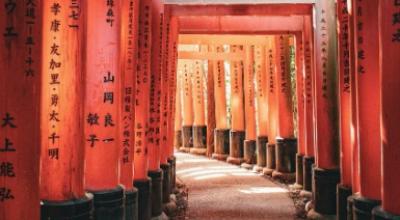
⛩️ FUSHIMI INARI — 10,000 TORII GATES

Head shrine of all 32,000 Inari shrines in Japan. A 4km mountain trail lined with vermillion torii gates — each donated by a Japanese business — winds up to the summit at 233m. Go at 5am. The upper trail will be empty, the light through the gates is like nowhere on earth.

FREE ENTRY24 HOURSGO AT 5AM
🟡 KINKAKU-JI — THE GOLDEN PAVILION

Three-storey Zen temple pavilion entirely covered in gold leaf, reflected in the Mirror Pond. Built 1397 as the retirement villa of Shogun Ashikaga Yoshimitsu. The actual gold shimmers in person in a way no photograph conveys. Arrive at opening (9am) to beat school tours.

¥500 ENTRYUNESCOARRIVE EARLY
🌿 ARASHIYAMA BAMBOO GROVE

500m grove of giant moso bamboo — stalks 20m tall, so densely packed the sky disappears. In early morning wind, the bamboo creaks at a low frequency listed as one of Japan's 100 Soundscapes Worth Preserving. Adjacent Tenryu-ji garden is a UNESCO Zen masterpiece.

FREE (PATH)6AM IS EMPTYUNESCO GARDEN NEARBY
🎭 GION — THE GEISHA DISTRICT

Preserved machiya wooden townhouse district where maiko (apprentice geisha) and geiko still move between engagements at dusk in full kimono. Hanamikoji Street at blue hour is the closest Japan comes to its own mythology. Photograph the architecture, not the women — they are working professionals.

FREE TO WALKEVENING ONLYNO FLASH PHOTOGRAPHY
// 02 // OSAKA PREFECTURE
大阪

OSAKA

おおさか // THE FOOD CAPITAL

🐙 KUIDAORE — EAT UNTIL YOU COLLAPSE

Osaka is the anti-Kyoto — louder, cheaper, funnier, and shameless about its love of food. The city gave Japan takoyaki, okonomiyaki, and the nation's most exuberant street food culture. "Kuidaore" — spending all your money on food — is a compliment here. Japan's most entrepreneurial and egalitarian food scene: spectacular meals at every price point.

HOVER OR TAP TO EXPLORE EACH HIGHLIGHT ↓

🐙 TAKOYAKI — OSAKA'S SOUL FOOD

Octopus-filled wheat batter balls, cooked on a cast-iron dimpled pan, dressed with sauce, kewpie mayo, bonito flakes, and aonori seaweed. Invented 1935. Wanaka Honten and Kukuru in Dōtombori serve the authentic version — crispy outside, liquid lava inside. Eat standing. Burn your tongue. Correct form.

WANAKA HONTENKUKURU¥600–800 / PORTION
🌃 DŌTOMBORI — NEON GROUND ZERO

The 300m canal strip with the mechanical Glico running man sign, restaurant signs three storeys tall, and wall-to-wall street food. Go at midnight. Every 100m is a different universe. The reflection of neon in the canal at 11pm is Japan's Times Square — but with better food.

FREEBEST AT MIDNIGHTGLICO SIGN
🏯 OSAKA CASTLE & MUSEUM

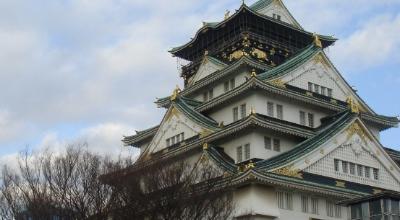
Toyotomi Hideyoshi's 16th-century fortress reconstructed in 1931, renovated 1997 — 8 storeys with a phenomenal view of the Osaka Plain. The surrounding Nishinomaru Garden has 300 cherry trees. The museum inside has the best samurai-era exhibition in western Japan.

¥600 CASTLEPARK FREECHERRY BLOSSOM
🎭 SHINSEKAI & TSŪTENKAKU

Osaka's 1912-built retro district: 103m Tsūtenkaku tower, kushikatsu (deep-fried skewers) with the famous "no double-dipping" rule, old-school mahjong parlours, and atmosphere unchanged since the Shōwa era. Most photogenic and least touristy neighbourhood in the city.

¥1,000 TOWERNO DOUBLE-DIPPINGRETRO OSAKA
// 03 // NARA PREFECTURE
奈良

NARA

なら // THE ANCIENT DEER PARK

🦌 JAPAN BEFORE KYOTO. THE FIRST CAPITAL.

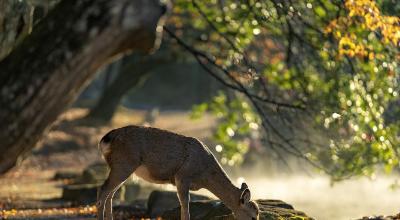
Nara was Japan's first permanent capital from 710–794 AD, before Kyoto even existed. Its Nara Park is home to 1,200 wild sika deer — divine messengers of the gods — who roam freely among UNESCO-listed temples. Tōdai-ji houses Japan's largest bronze Buddha (15m tall) inside the world's largest wooden building.

HOVER OR TAP TO EXPLORE EACH HIGHLIGHT ↓

🦌 NARA PARK — THE DIVINE DEER

1,200 wild Sika deer roaming 502 hectares. Living here since 768 AD — considered sacred messengers of Shinto deity Takemikazuchi. They have learned to bow for food over 1,300 years. Buy deer crackers (shika senbei ¥200) and hold at arm's length or expect a full surround.

FREE ENTRY¥200 CRACKERSYEAR-ROUND
🏛️ TŌDAI-JI — THE GREAT EASTERN TEMPLE

Japan's largest bronze statue (15m, 437 tonnes) housed in the world's largest wooden building. Built by Emperor Shōmu in 752 AD. The Buddha's nostril contains a pillar with a hole the same size — crawling through is said to guarantee enlightenment. Opens 7:30am.

¥6007:30AM OPENUNESCO
🌸 YOSHINO — JAPAN'S GREATEST CHERRY BLOSSOM

30,000 cherry trees on a mountainside in four distinct zones blooming in successive waves over three weeks in April. A cherry blossom site since the 7th century. Book your ryokan 6+ months ahead for March–April. The walk from valley to summit through successive clouds of pink is once in a lifetime.

APRIL PEAKBOOK EARLY30,000 TREES
⛩️ KASUGA TAISHA — THE LANTERN SHRINE

3,000 stone and bronze lanterns line the cedar forest path to this 768 AD Shinto shrine. Twice a year (February Setsubun, August Obon) every lantern is lit simultaneously. In the February darkness, the effect is transformative. The moss-covered stone lanterns in cedar forest are among Japan's most atmospheric sights.

FREE TO WALKFEB & AUG LANTERN FESTIVALCEDAR FOREST
// 04 // HYOGO PREFECTURE
兵庫

HYOGO

ひょうご // KOBE & HIMEJI

🥩 KOBE BEEF. HIMEJI CASTLE. PORT CITY COOL.

Hyogo is Japan's most cosmopolitan prefecture — where Kobe's port tradition produced Japan's most international city, and where the world's most exclusive beef certification was born. Himeji Castle, the nation's most spectacular original feudal fortress, stands 60km to the west. The Arima onsen hot spring town hides in the Rokko mountains above Kobe.

HOVER OR TAP TO EXPLORE EACH HIGHLIGHT ↓

🏯 HIMEJI CASTLE — WHITE HERON CASTLE

Japan's most architecturally magnificent surviving feudal castle — six storeys of brilliant white plaster, visible from 15km. Built 1333, expanded 1601, never destroyed by war or fire. The defensive approach is a deliberate labyrinth with 30 gates designed to disorient invaders. 30 min from Kobe by Shinkansen.

UNESCO¥1,000ORIGINAL STRUCTURE
🥩 KOBE BEEF — THE WORLD'S RAREST MEAT

Tajima-strain Wagyu born, raised, and slaughtered in Hyogo. Must achieve BMS 6+ marbling score. Fewer than 3,000 head certified per year. The fat melts at 25°C — below body temperature — so the first bite liquefies on the tongue. Budget ¥15,000 for teppanyaki lunch; ¥40,000–80,000 for full dinner course.

<3,000 HEAD/YEARBMS 6+ REQUIREDLOOK FOR CERTIFICATE
🌃 KITANO-CHŌ — THE FOREIGN QUARTER

Victorian townhouses, German Biedermeier mansions, and Art Deco villas built by Kobe's foreign merchant community from the 1870s–1930s. Over 30 surviving ijinkan (foreign residences) now serve as museums. Kobe's exceptional coffee culture centres on this hillside neighbourhood above the port.

HILLSIDE VIEWS30+ MUSEUMSBEST COFFEE IN KANSAI
♨️ ARIMA ONSEN — JAPAN'S OLDEST HOT SPRING

One of Japan's three oldest hot spring resorts, hidden in the Rokko Mountains 40 min from Kobe. Two types of spring: kinsen (gold spring, rust-red iron-rich water) and ginsen (silver spring, colourless radium water). Referenced in 7th-century chronicles. Ryokan from ¥30,000/night including kaiseki dinner.

40 MIN FROM KOBEGOLD + SILVER SPRINGS7TH-CENTURY HISTORY
// 05 // SHIGA PREFECTURE
滋賀

SHIGA

しが // THE LAKE PREFECTURE

🌊 JAPAN'S LARGEST LAKE. KANSAI'S SECRET GARDEN.

Shiga is Kansai's best-kept secret — a prefecture centred on Lake Biwa, Japan's largest lake at 670km², which has existed for over 4 million years. The castle town of Hikone holds Japan's finest small castle (1622). The Miho Museum — I.M. Pei's glass and stone masterpiece embedded in a mountain forest — houses one of Asia's finest private art collections.

HOVER OR TAP TO EXPLORE EACH HIGHLIGHT ↓

🌊 LAKE BIWA — JAPAN'S OLDEST LAKE

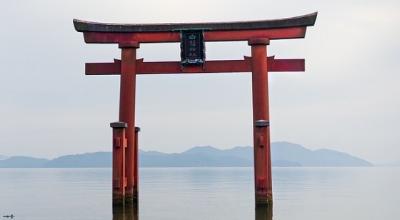
670km² of ancient lake surrounded by mountains, dotted with floating torii gates and ancient lakeside towns. Over 4 million years old — one of the world's ancient lakes. Sunrise over the lake from Omi Shrine in November, with frost on the reeds and cranes overhead, is among Japan's greatest photographic moments.

670KM²4M YEARS OLDFLOATING TORII
🏯 HIKONE CASTLE — THE SMALL PERFECT CASTLE

One of only 12 original surviving castles in Japan, built 1622 on a hill above Lake Biwa. The 3-storey keep is Japan's most intimate original castle interior. The adjacent Genkyu-en garden uses Lake Biwa as its "borrowed scenery" (shakkei) — making the lake itself part of the composition.

ORIGINAL STRUCTURE¥800SHAKKEI GARDEN
🎨 MIHO MUSEUM — THE MOUNTAIN ART TUNNEL

I.M. Pei's 1997 masterpiece: a museum entered through a 247m stone tunnel that opens into a glass-and-granite building suspended in cedar forest. The collection spans 3,000 years — Egyptian, Greek, Roman, Persian, and Asian. The architecture and approach alone are worth the journey from Kyoto.

I.M. PEI DESIGN247M TUNNEL ENTRY¥1,100
🍣 FUNAZUSHI — JAPAN'S OLDEST SUSHI

Lake Biwa's crucian carp stuffed with salt-packed rice and fermented for 1–4 years — Japan's oldest known form of sushi, predating Edo-period nigiri by 600+ years. The smell is extraordinary: aged parmesan times ten. Deeply savoury, sour, complex. A single portion: ¥3,000–6,000 at Kinta in Otsu.

KINTA, OTSU4-YEAR FERMENTATIONEXTREMELY ACQUIRED TASTE
// 06 // WAKAYAMA PREFECTURE
和歌山

WAKAYAMA

わかやま // THE SACRED MOUNTAIN PREFECTURE

🏔️ KOYASAN. KUMANO KODO. JAPAN'S SPIRITUAL WILDERNESS.

Wakayama is where Japan's spiritual landscape reaches its most concentrated form. Koyasan — Kōbō Daishi's mountaintop monastery established in 816 AD — sits at 900m above sea level, accessible only by cable car. The Kumano Kodo is one of only two pilgrimage routes in the world with dual UNESCO recognition (the other: Spain's Camino de Santiago).

HOVER OR TAP TO EXPLORE EACH HIGHLIGHT ↓

⛩️ KOYASAN — THE MOUNTAIN MONASTERY

816 AD. Shingon Buddhism HQ. 117 temples on a 900m plateau. Okunoin cemetery — 2km of stone lanterns in ancient cedar forest, 200,000+ graves — Japan's most sacred site. Stay in shukubo (temple lodging): wake at 5:30am for goma fire ceremony, eat shōjin ryōri (Zen vegetarian cuisine). One of Japan's five non-negotiable experiences.

OVERNIGHT RECOMMENDED5:30AM CEREMONYCABLE CAR ACCESS
🌿 KUMANO KODO — ANCIENT PILGRIMAGE ROAD

UNESCO pilgrimage routes through Kii mountain forests to three Kumano Grand Shrines. Nakahechi route from Tanabe (3–5 days walking) is most accessible. One of only TWO pilgrimage routes with dual UNESCO recognition worldwide. The forest is the destination: mist-draped cedar, moss-covered stone steps, unchanged for a millennium.

DUAL UNESCO3–5 DAYS WALKINGNAKAHECHI ROUTE
🌊 NACHI FALLS & SEIGANTO-JI

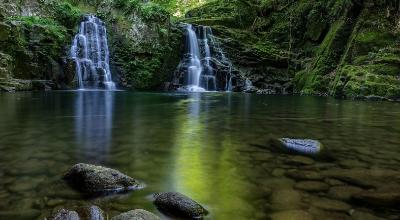
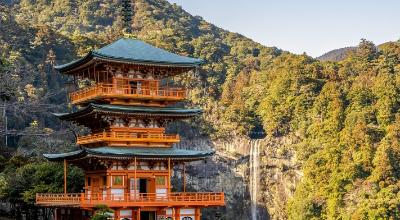
Japan's tallest free-falling waterfall at 133m, with the vermillion three-storey pagoda of Seiganto-ji framed against it — the single most reproduced image in Japanese photography. The waterfall itself is considered a deity. Best seen from the viewpoint deck at 7am before tour groups arrive.

133M WATERFALLGO AT 7AMFREE VIEWPOINT

SECTION 02 // 食い倒れ

KANSAI FOOD

KUIDAORE — EAT UNTIL YOU COLLAPSE. THE FOOD CAPITAL OF JAPAN.

TAKOYAKI

たこ焼き // OSAKA, 1935 // THE ORIGINAL STREET FOOD

Takoyaki is Osaka's defining food — arguably the greatest street snack on earth. Born in 1935 when Tomekichi Endo of Aizuya restaurant adapted the akashiyaki recipe and replaced the filling with octopus. The dish spread through Osaka with the speed of religion.

The technique requires a cast-iron pan with 24 hemispherical dimples at 210°C. The ideal takoyaki is crispy and charred outside — liquid and custardy inside. Dressed with Worcestershire-style sauce, Kewpie mayo, bonito flakes that writhe in the heat, and aonori seaweed.

There are 1,500+ takoyaki shops in Osaka. They are not equal. Wanaka Honten (Dōtombori, since 1939), Kukuru (Osaka Station), and Jumbo (Kuromon Market) represent the non-negotiable tier. Eat at the stall, standing, immediately. Burns are not a complaint — they are evidence.

THE GOLDEN RATIO — OSAKA'S BATTER SECRET
1 part wheat flour to 8–10 parts dashi stock — far more liquid than any amateur recipe. The extra dashi creates the molten interior. Osaka tap water, softened by the Yodo River basin, produces a lighter batter than other cities can achieve.
THE DŌTOMBORI THREE
Wanaka Honten (since 1939) — the institution. Kukuru — most technically consistent. Takoyaki Jumbo — largest balls, best for eating whole.
OKONOMIYAKI — OSAKA'S OTHER OBSESSION
The "as-you-like-it pancake": wheat batter mixed with shredded cabbage, egg, and choice fillings, cooked on a teppan griddle. Osaka style (mixed throughout) differs from Hiroshima style (layered). Mizuno restaurant in Dōtombori since 1945.

KOBE BEEF

神戸ビーフ // HYOGO PREFECTURE // THE WORLD'S MOST EXCLUSIVE BEEF

Kobe beef is a strict certification — not a brand. To carry the label, an animal must be Tajima-strain Wagyu, born in Hyogo Prefecture, raised in Hyogo, slaughtered at three approved Hyogo facilities, achieve meat quality grade A4 or A5, a Beef Marble Score of 6 or above, and weigh no more than 499.9kg. Fewer than 3,000 head qualify per year.

The extraordinary marbling produces a texture unlike any other meat: the fat melts at 25°C — below human body temperature — so the first bite liquefies on the tongue before chewing begins. Certified Kobe beef restaurants display the official Marketing Association certificate. Budget ¥15,000 for lunchtime teppanyaki; ¥40,000–80,000 for a full dinner course.

<3K
HEAD CERTIFIED/YEAR
BMS6+
MIN. MARBLING SCORE
A4/A5
MEAT QUALITY GRADE
400+
CERTIFIED RESTAURANTS
25°C
FAT MELT POINT
🍵
KYOTO MATCHA
抹茶 // KYOTO UJICHA

Uji city, 15 minutes south of Kyoto, has produced Japan's finest green tea since the 12th century. Deep, almost savoury umami sweetness with no bitterness. The Uji riverside tea ceremony experience at Taihoan tearoom is authentic and affordable.

📍 UJI CITY + NISHIKI MARKET, KYOTO — ORIGIN-POINT MATCHA
🍜
KAISEKI
懐石料理 // MULTI-COURSE REFINED CUISINE

Japan's highest form of cuisine — born in Kyoto as the meal preceding the tea ceremony. 12–16 courses of seasonal ingredients. Lunch kaiseki (¥8,000–15,000) at Kikunoi is the most accessible entry point. Dinner courses reach ¥80,000 at Kichisen (three Michelin stars).

📍 KIKUNOI HONTEN, HIGASHIYAMA, KYOTO — MOST ACCESSIBLE MICHELIN KAISEKI
🍢
KUSHIKATSU
串カツ // OSAKA SHINSEKAI

Deep-fried skewers coated in fine panko, served with the communal sauce pot bearing the sacred rule: "Double-dipping is absolutely forbidden." Invented 1929 in Osaka's working-class Shinsekai district. Daruma restaurant is the originator.

📍 DARUMA HONTEN, SHINSEKAI, OSAKA — THE ORIGINATOR, SINCE 1929
🍣
FUNAZUSHI
鮒寿司 // JAPAN'S OLDEST SUSHI

Lake Biwa's crucian carp fermented for 1–4 years — Japan's oldest known sushi, predating Edo-period nigiri by 600+ years. The smell: aged parmesan times ten. The taste: deeply savoury, sour, complex. Extremely acquired; genuinely irreplaceable cultural artifact.

📍 KINTA, OTSU, SHIGA — BEST TRADITIONAL PRODUCER
🥟
KOBE PORK BUN
豚まん // KOBE NANKINMACHI

Kobe's Nankinmachi Chinatown serves butaman larger, juicier, and more generously filled than any other city's version — a direct lineage from Chinese immigrants who settled after 1868. Jiang brand from Nankinmachi Square is the benchmark.

📍 NANKINMACHI, KOBE — AUTHENTIC CHINATOWN SOURCE
🍡
YATSUHASHI
八ツ橋 // KYOTO'S ICONIC SWEET

Kyoto's most beloved confection: a thin cinnamon-flavoured rice flour sheet, folded around sweet red bean paste (otabe). Named after koto musician Yatsuhashi Kengyō (1614–1685). Nishio Yatsuhashi (founded 1689) is the original manufacturer.

📍 KYOTO STATION + ALL KYOTO GIFT SHOPS — NON-NEGOTIABLE SOUVENIR
03

VIBE CHECK — DŌTOMBORI

📍 DŌTOMBORI CANAL, OSAKA — NEON GROUND ZERO // 34.6687°N 135.5023°E
● LIVE VIEW // DŌTOMBORI // OSAKA, JAPAN
DŌTOMBORI CANAL — JAPAN'S MOST PHOTOGRAPHED STREET. THE GLICO RUNNING MAN IS 200M TO THE RIGHT. BEST AT MIDNIGHT.
04

UNMISSABLE DESTINATIONS

THE KANSAI HIT LIST — ESSENTIAL SITES
⛩️
FUSHIMI INARI TAISHA
📍 FUSHIMI WARD, KYOTO

Head shrine of all 32,000 Inari shrines. The 4km mountain trail passes through a continuous tunnel of 10,000+ vermillion torii gates. Summit at 233m takes 2–3 hours return. Open 24 hours — at 5am in morning mist, with foxes crossing the path, this is Japan at its most mythological.

FREE ENTRY24 HOURSGO AT 5AM
🟡
KINKAKU-JI
📍 KITA WARD, KYOTO

The Gold Pavilion — three storeys of gold leaf reflected in the Mirror Pond. Every season produces a version that makes the photograph feel inadequate: scarlet maples in November, snow on the gold eaves in January. Arrive at opening (9am) to beat the school tours.

¥500 ENTRYUNESCOARRIVE EARLY
🌿
ARASHIYAMA BAMBOO
📍 ARASHIYAMA, KYOTO

A 500m grove of giant moso bamboo, stalks 20m tall, so densely packed the sky disappears. The light inside is green-filtered and otherworldly. In early morning wind, the bamboo's low-frequency creak is listed as one of Japan's 100 Soundscapes Worth Preserving.

FREE (PATH)6AM IS EMPTYUNESCO GARDEN
🦌
NARA DEER PARK
📍 NARA CITY, NARA

1,200 wild Sika deer roaming 502 hectares of ancient parkland alongside UNESCO-listed temples. The deer have lived here since 768 AD, considered sacred messengers. They have learned to bow for food over 1,300 years. Buy deer crackers (shika senbei ¥200) and hold at arm's length.

FREE ENTRYYEAR-ROUNDDEER BOW
🏯
HIMEJI CASTLE
📍 HIMEJI, HYOGO

Japan's most magnificent surviving feudal castle — six storeys of brilliant white plaster, visible from 15km. Built 1333, expanded 1601, never destroyed. The defensive approach is a deliberate labyrinth with 30 gates designed to disorient invaders. Most accessible from Kobe (30 min Shinkansen).

UNESCO¥1,000ORIGINAL STRUCTURE
⛩️
KOYASAN
📍 KOYA, WAKAYAMA

Kōbō Daishi's mountaintop monastery at 900m — 117 temples, 200,000+ graves in Okunoin cedar forest, and the fire ceremony performed uninterrupted since 816 AD. The overnight shukubo experience — temple room, futon, Zen cuisine, 6am ceremony in candlelit darkness — is Japan's most spiritually potent overnight.

OVERNIGHT REC.6AM CEREMONYUNESCO
05

2026 FESTIVALS

KANSAI'S CEREMONIAL CALENDAR — 1,200 YEARS OF RITUAL
MAR 20 – APR 10, 2026 (EST)
CHERRY BLOSSOM SEASON
📍 KYOTO (MARUYAMA, PHILOSOPHER'S PATH), YOSHINO (NARA)

Kansai's sakura season is Japan's most celebrated. Kyoto's Maruyama Park (weeping cherry tree, illuminated at night), Philosopher's Path canal, and Nijo Castle moat are unmissable. Nara's Yoshino mountain — 30,000 trees across four zones blooming in successive waves — is the apex of the cherry blossom experience. Book accommodation in January.

SAKURANATURAL EVENT
JUL 1–31, 2026
GION MATSURI
📍 KYOTO CITY CENTRE — YAMABOKO FLOATS PARADE

Japan's most celebrated festival — 1,150 years old, UNESCO-listed. Two parade days: July 17 (23 floats) and July 24 (11 floats). The yamaboko floats — wooden towers up to 25m tall — carry tapestries from Europe, Persia, and China collected over centuries. Yoiyama evenings (July 14–16) when lantern-lit floats are displayed are freely walkable.

1,150 YEARS OLDSTREET VIEWING FREE
FEB 2–4, 2026
KASUGA LANTERN FESTIVAL
📍 KASUGA TAISHA SHRINE, NARA

All 3,000 stone and bronze lanterns in Kasuga Taisha shrine lit simultaneously. In February darkness, the lantern-lined cedar forest path glows with a warmth 1,300 years old. Priests in white Heian robes perform purification rites by torchlight. The most magical night in Nara's ceremonial calendar.

SHINTO CEREMONYLANTERN GLOW
AUG 16, 2026
GOZAN NO OKURIBI (DAIMONJI)
📍 FIVE MOUNTAINS SURROUNDING KYOTO

At 8pm on August 16th, five massive bonfires are lit on Kyoto's surrounding mountains to guide ancestral spirits back after Obon. The famous 大 (Dai) character blazes on Higashiyama — 160m wide, visible across the city. Four other designs lit simultaneously. Duration: 20 minutes. The brevity is the point.

BUDDHIST RITE20-MINUTE EVENT
NOV 1–30, 2026
KYOTO KŌYŌ — AUTUMN FOLIAGE
📍 EIKAN-DO, TOFUKU-JI, ARASHIYAMA — KYOTO

Kyoto's autumn foliage rivals its sakura. Tōfuku-ji temple (240 maple trees in the bridge garden), Eikan-dō (night viewings), Kiyomizu-dera (scarlet maples against the wooden stage), and Arashiyama hillside all peak mid-to-late November. Evening illuminations run at 20+ temples. Book restaurant reservations in September.

AUTUMN FOLIAGEPEAK: MID-NOV
OCT 22, 2026
JIDAI MATSURI — FESTIVAL OF THE AGES
📍 HEIAN SHRINE → KYOTO IMPERIAL PALACE

A 2,000-person procession through Kyoto wearing perfectly researched historical costumes from every era of Japanese history — from Heian court dress (794 AD) through the Meiji era (1868). Founded in 1895 to mark Kyoto's 1,100th anniversary. Completely free to watch from the parade route.

FREE STREET VIEWINGHISTORICAL PAGEANT
06

SUGGESTED ITINERARIES

01

ARRIVE OSAKA — DŌTOMBORI & KUROMON

Fly or take the Shinkansen to Osaka. Check in near Namba. Head directly to Kuromon Ichiba market for lunch — maguro, sea urchin, fresh Wagyu on hot plate stalls. Afternoon: Shinsekai district and Tsūtenkaku tower. Evening: Dōtombori. Takoyaki at Wanaka Honten, walk the canal. Kushikatsu at Daruma. Eat constantly. Regret nothing.

KUROMON MARKETSHINSEKAIDŌTOMBORITAKOYAKI WANAKA
02

NARA — DEER, TODAI-JI & KASUGA TAISHA

35-minute express from Osaka to Nara. Arrive by 8am. Tōdai-ji opens at 7:30am — the Great Buddha at dawn with morning light is the correct time to visit. Feed the deer (¥200 shika senbei). Kasuga Taisha's lantern-lined cedar forest. Isuien Garden for afternoon tea. Return to Osaka: Hozenji Yokocho alley izakayas for dinner.

TŌDAI-JINARA DEER PARKKASUGA TAISHAHOZENJI YOKOCHO
03

KYOTO — FUSHIMI INARI & GION

Leave Osaka by 4:30am. Arrive Fushimi Inari at 5am. Walk the entire mountain trail in empty mist. Back to Kyoto city centre by 9am. Philosopher's Path, Nanzen-ji, Heian Shrine. Afternoon: Gion district. Rest. Return to Gion at 5:30pm for the blue hour on Hanamikoji Street. Dinner at Ponto-chō alley.

FUSHIMI INARI 5AMPHILOSOPHER'S PATHGION EVENINGPONTOCHŌ DINNER
04

KYOTO — ARASHIYAMA, KINKAKU-JI

Arashiyama bamboo grove at 6am — empty, atmospheric, correct. Tenryu-ji Zen garden (UNESCO). Take the Sagano Scenic Railway to Kameoka. Return Kinkaku-ji. Nijo Castle. Nishiki Market (Kyoto's Kitchen) for street food lunch. Afternoon: Philosopher's Path tea houses. Sunset at Yasaka Pagoda for the last golden light on Higashiyama.

ARASHIYAMA BAMBOO 6AMKINKAKU-JINISHIKI MARKETYASAKA PAGODA
05

KOBE — BEEF, HIMEJI CASTLE, DEPARTURE

Morning Shinkansen to Himeji (30 min from Kobe). Himeji Castle opens at 9am — arrive early. Return to Kobe via Himeji. Lunch: genuine Kobe beef teppanyaki at a certified restaurant in Kitano-chō (verify certificate). Afternoon: Nankinmachi Chinatown, pork buns. Coffee at one of Kobe's independent roasters. Depart from Kobe or Osaka.

HIMEJI CASTLEKOBE BEEF LUNCHNANKINMACHIKITANO-CHŌ
01

ARRIVE OSAKA

Land, check in to Namba. Kuromon Ichiba market. Dōtombori for takoyaki and neon. Shinsekai for kushikatsu. Dotonbori canal at midnight.

KUROMONDŌTOMBORISHINSEKAI
02

NARA DAY TRIP

35-min express from Osaka. Tōdai-ji at 7:30am dawn. Feed the deer. Kasuga Taisha cedar forest. Isuien garden. Return: Hozenji Yokocho izakayas, Osaka castle morning.

TŌDAI-JINARA PARKKASUGA TAISHA
03

KYOTO — EAST SIDE

Fushimi Inari at 5am. Gion at 10am. Kiyomizu-dera. Philosopher's Path. Nanzen-ji. Maruyama Park evening. Pontochō alley dinner.

FUSHIMI INARIGIONPHILOSOPHER'S PATHKIYOMIZU
04

KYOTO — NORTHWEST & ARASHIYAMA

Kinkaku-ji at 9am opening. Ryoan-ji rock garden. Nijo Castle. Arashiyama bamboo after lunch (still atmospheric mid-day). Tenryu-ji Zen garden. Sagano tram. Hozu River boat trip.

KINKAKU-JIRYOAN-JIARASHIYAMATENRYU-JI
05

KOBE

Himeji Castle (30 min). Return Kobe. Kobe beef teppanyaki lunch at certified restaurant. Kitano-chō foreign district walking. Nankinmachi pork buns. Rooftop coffee. Arima Onsen evening soak (40 min mountains).

HIMEJI CASTLEKOBE BEEFKITANO-CHŌARIMA ONSEN
06

SHIGA — LAKE BIWA & HIKONE

Hikone Castle (original 1622 structure). Lake Biwa waterfront. Miho Museum (I.M. Pei — book ahead). Return via Otsu for funazushi (the adventurous). Stay Hikone or return Kyoto.

HIKONE CASTLELAKE BIWAMIHO MUSEUM
07

WAKAYAMA — KOYASAN (OVERNIGHT)

Nankai Koya Line + cable car to summit. Check in shukubo temple lodging. Afternoon: Okunoin cemetery cedar forest (the most atmospheric walk in Japan). Evening shōjin ryōri Zen dinner. Sleep in Buddhist monastery.

NANKAI + CABLE CARSHUKUBO CHECK-INOKUNOIN CEMETERYSHŌJIN RYŌRI
08

KOYASAN — GOMA CEREMONY & KUMANO

5:30am wake. 6am goma fire ceremony in candlelit darkness. Explore Koyasan temples. Afternoon: depart for Tanabe (start of Kumano Kodo Nakahechi route). Overnight Tanabe.

6AM GOMA CEREMONYKONGOBU-JI TEMPLETANABE ARRIVAL
09

KUMANO KODO WALK — DAY 1

Walk Day 1 of the Nakahechi route. Ancient stone steps, mist-draped cedar, roadside shrines unchanged for 1,000 years. Overnight Chikatsuyu-o.

NAKAHECHI ROUTETAKIJIRI-OJI SHRINECHIKATSUYU OVERNIGHT
10

NACHI FALLS & DEPARTURE

Continue to Hongu Grand Shrine — the spiritual terminus. Afternoon bus to Nachi. Nachi Falls (133m, Japan's tallest) and Seiganto-ji pagoda at 7am is the finest photograph in Japan. Return Osaka/Kyoto for departure.

KUMANO HONGU TAISHANACHI FALLSSEIGANTO-JI
01

KYOTO — FUSHIMI, TOFUKU-JI, KIYOMIZU

Fushimi Inari 5am — the only way. Tōfuku-ji (finest Zen garden in Kyoto, 240 maples). Kiyomizu-dera wooden stage over the hillside. Higashiyama temple corridor walk at dusk: Sannenzaka, Ninenzaka, Kodai-ji.

FUSHIMI INARITŌFUKU-JIKIYOMIZU-DERAHIGASHIYAMA
02

KYOTO — RYOAN-JI, DAITOKU-JI, KINKAKU-JI

Ryoan-ji (15 stones, no two visible simultaneously — the most debated garden in Japan). Daitoku-ji complex (20+ sub-temples, most undervisited in Kyoto). Kinkaku-ji at closing time as golden light hits the pavilion.

RYOAN-JIDAITOKU-JIKINKAKU-JI EVENING
03

NARA — TŌDAI-JI, KASUGA, HŌRYŪ-JI

Tōdai-ji at dawn. Kasuga Taisha (3,000 lanterns in cedar forest). Hōryū-ji — Japan's oldest wooden buildings, built 607 AD, the world's oldest surviving wooden structures. The ancient craftsmanship is unlike anything in Kyoto.

TŌDAI-JIKASUGA TAISHAHŌRYŪ-JI (607 AD)
04

KOYASAN — THE SUMMIT

Koyasan's entire monastic complex: Kongobu-ji headquarters. Dan-jo Garan ceremonial complex. Okunoin cemetery. Stay overnight in shukubo for the 6am fire ceremony — the point of the entire circuit.

KONGOBU-JIDAN-JO GARANOKUNOINSHUKUBO OVERNIGHT
05

KUMANO GRAND SHRINES

Hongu Taisha (Japan's most sacred Shinto site). The vast Oyunohara plain with the world's largest torii gate (34m). Hayatama Taisha. Nachi Taisha beside the 133m waterfall considered a deity. Return Osaka.

KUMANO HONGUOYUNOHARA TORIINACHI TAISHANACHI FALLS
07

BUDGET CALCULATOR

ESTIMATED TOTAL TRIP COST — LIVE CURRENCY CONVERSION

PLAN YOUR TRIP

¥0
SELECT OPTIONS ABOVE TO SEE YOUR ESTIMATE
08

KANSAI PHRASEBOOK

ESSENTIAL JAPANESE + OSAKA-BEN DIALECT — TAP CARD TO COPY
たこ焼きをください
TAKOYAKI O KUDASAI
"One takoyaki please" — your most-spoken sentence in Osaka
▶ TAP TO COPY
まいど!
MAIDO!
Osaka greeting: "Welcome back!" — how every Osaka shopkeeper greets you
▶ TAP TO COPY
どこのお寺ですか?
DOKO NO OTERA DESU KA?
"Which temple is this?" — essential Kyoto navigation
▶ TAP TO COPY
鹿のせんべいは
どこですか?
SHIKA NO SENBEI WA DOKO?
"Where are the deer crackers?" — buy before entering Nara Park
▶ TAP TO COPY
二度付け禁止
NIDOZUKE KINSHI
"No double-dipping" — the sacred law of Osaka's kushikatsu sauce pot
▶ TAP TO COPY
これは本当に
神戸牛ですか?
KORE WA HONTO NI KOBE-GYŪ?
"Is this genuine Kobe beef?" — verify before ordering the expensive one
▶ TAP TO COPY
ありがとうございます
ARIGATOU GOZAIMASU
Thank you (formal) — use at every opportunity, especially in Kyoto
▶ TAP TO COPY
おいしい!
OISHII!
"Delicious!" — say this to any Osaka cook and watch their face change
▶ TAP TO COPY